The church was locked up tight. We drove around the vast parking lot, acutely aware of what’s under the tires – probably a plaza and multi-story pueblo.
We came to see the interior of Socorro’s San Miguel Mission. Our associate Chan Graham was involved in a renovation in the 1970s and considered it one of his favorite projects. A man watering rose bushes in the churchyard told us that since “covida” they keep the church locked up except for services. Mass was at Five. Jerry asked him about the church and grounds and I admired the new expandable hose he was using. But our charm didn’t work. He didn’t have keys and we were a long way from mass.
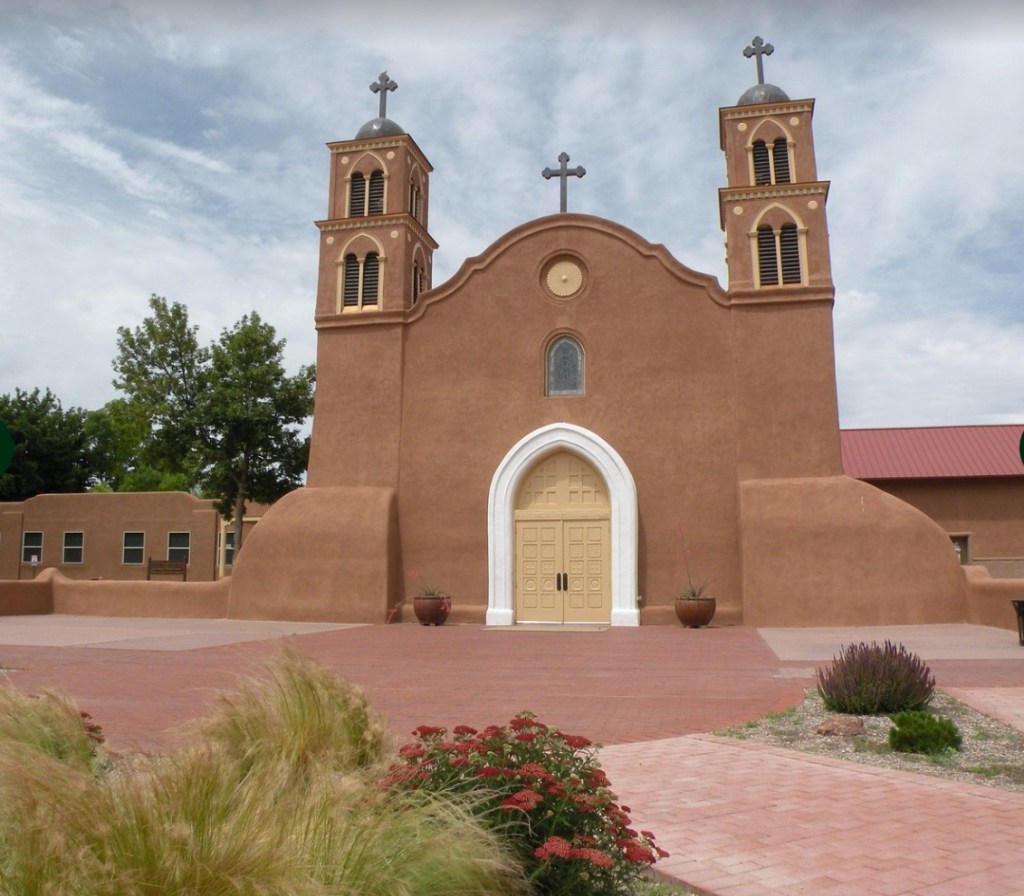
The church is celebrated for being among the first Missions established by Franciscans in the 1620s. Oñate led explorers and a couple of priests here, or near here, in 1598. In their relief at finding friendly native Piro villagers, the place was later named ‘Our Lady of Perpetual Help’ or Nuestra Señora de Perpetuo Socorro.
They weren’t the first Spanish explorers by a long shot. Multiple Piro villages sat along on the route to and from Mexico and at the northern end of the notorious Journada del Muerto, a near waterless segment of the Camino Real.
According to Spanish chroniclers the place name for the area south of Tiguex was Tutahaco. The individual village names in the Piro “kingdom” are probably Spanish versions of the original place names They are intriguing; Seelocu, Pilabo, Teipana, Senecu or Tzenoque, and Qualcu. The overwhelming majority of these sites have been partially or totally destroyed through neglect or flooding or both.
There’s Always a Treasure. I think it’s usually a metaphor.
The Pueblo Revolt in 1680 forced long term abandonment of Socorro. According to the church website, a priest buried church silver, including a solid silver communion rail. The silver was never found. Or no one ever admitted to finding it.
The church was renamed San Miguel after Apache raiders were purportedly scared off by a sighting of the Saint brandishing his sword. It was substantially rebuilt after raids were subdued in the mid 19th century.
Bishop Lamy tried to bring six nuns to the New Mexico in 1852 but only four managed to survive the journey. They went on to establish 10 schools including the school in Socorro in 1879. The school – Our Lady of Mount Carmel operated continuously until closure in 1998.
Lucerne sounds nicer
It was a nice day with no smoke or wind, unlike the day before and the day after. We got off the freeway at San Acacia, south of Albuquerque. We tried to take the older roads that hug the side of the valley and canals past old adobes, mobile homes and fields of alfalfa.
Alfalfa was introduced to what is now New Mexico by the Spanish in the 16th century to feed livestock. Cultivation began long long before that in ancient Iran.
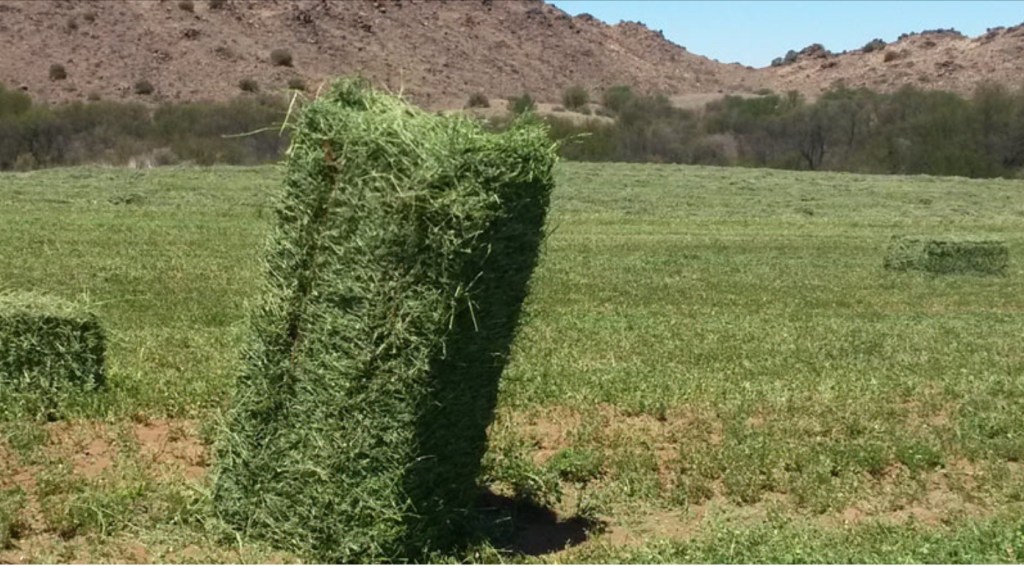
It gets a bad rap for using too much water. That’s largely because it’s watered to produce multiple cuttings a year. It will grow without it too and for a long time. A 4th century Greek author notes these critical properties: one sowing can last over a decade and it can be cut 4 to 6 times a year. It also increases soil nitrogen and its deep roots sustain it through drought.
Jerry reminds me alfalfa was once called lucerne. We agree that sounds much nicer. More descriptive.
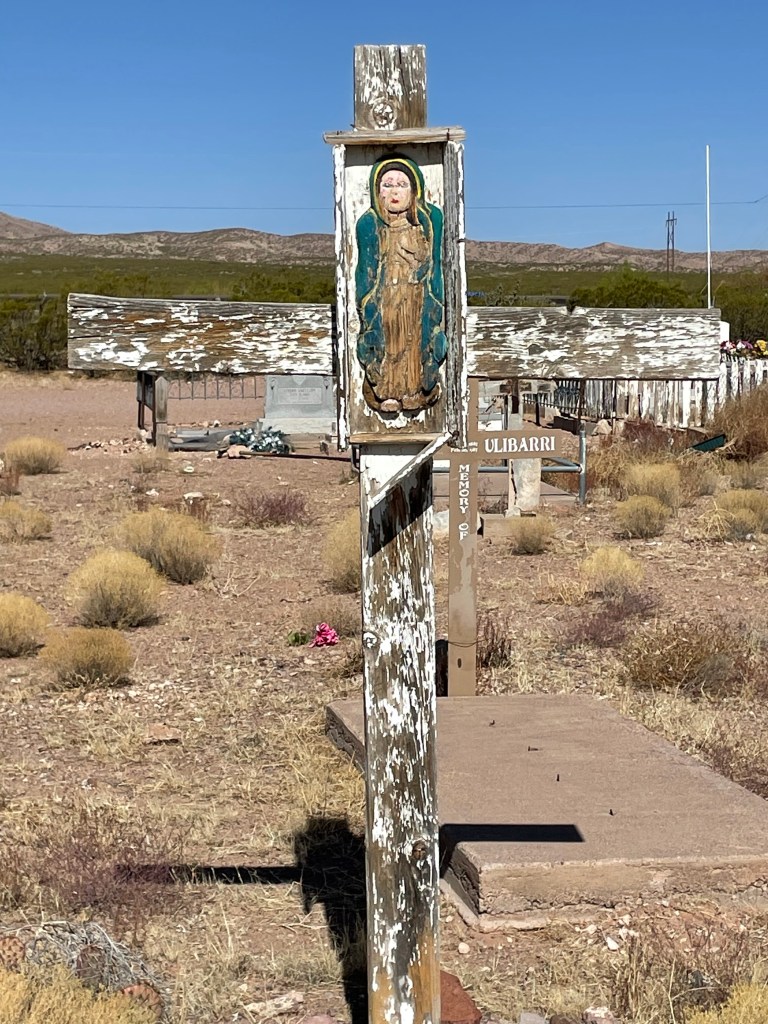
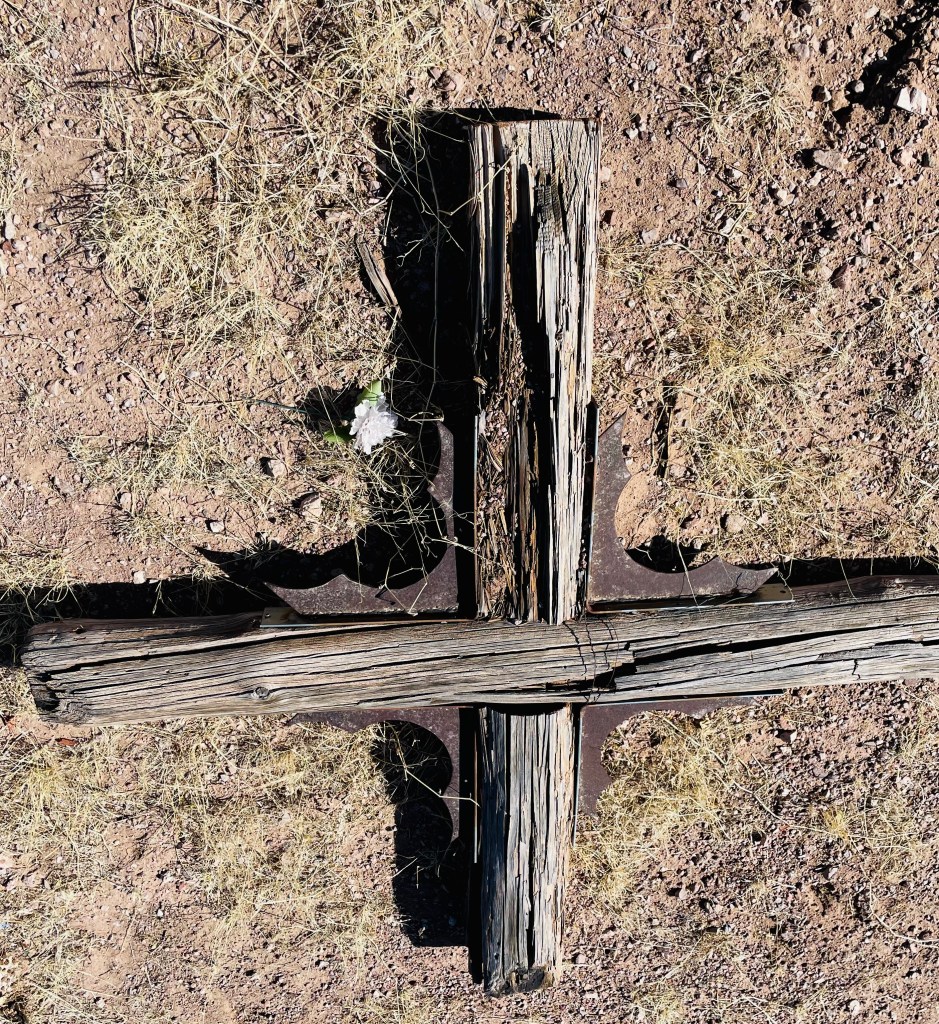
We stop at the cemeteries and search for the oldest graves, knowing the oldest are often unmarked or buried next to or under the churches.


One response to “2022 Journey with Jerry”
[…] Jerry favors the AAA “Indian Country“ map that covers parts of Arizona, Colorado, New Mexico, and Utah. It’s published by the Automobile Club of Southern California and still sold. About the only thing “wrong” with this map is that is can’t possibly cover all of Indian Country. Apacheria is completely outside the map area, for example. […]
LikeLike