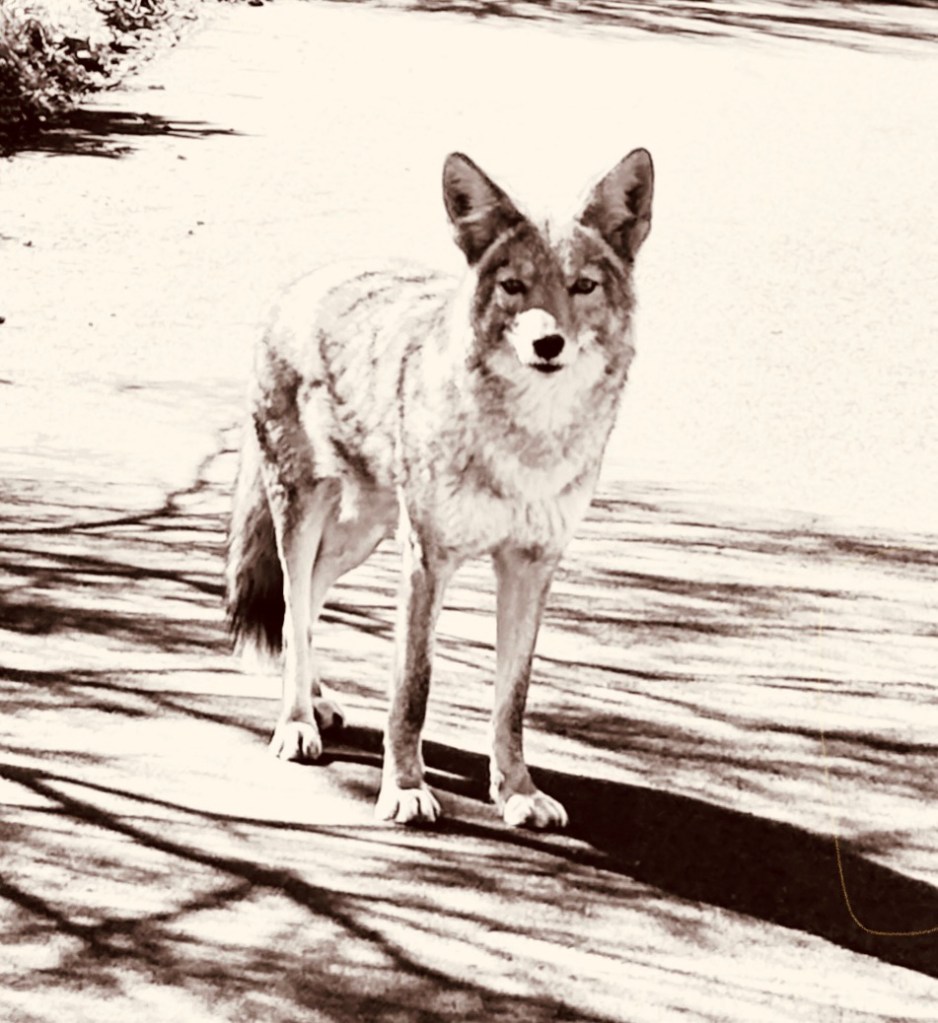
They wake me in the morning, keening. Crying and counting themselves. Telling about the territories and where mean humans live. Calls about when and where to cross the highways and probably boasts about their conquests.
“They can live almost anywhere; they can eat almost anything. Poison them, shoot them, trap them – coyotes come back. It is their super power.”
Just finished the 2024 book, Coyotes Among Us: Secrets of the City’s Top Predator. Authors Stanley Gehrig and Kerry Luft describe their groundbreaking twenty-years of coyote research in the Chicago area.
They found that coyotes avoid people and human attacks are very rare. Conflicts are almost entirely limited to cases where humans feed coyotes and encouraged boldness. They are well equipped to survive with or without us, as they have survived centuries of persecution.
They are monogamous, unlike the wolf. They rarely fight each other, unlike the wolf.
Their howling indicates individual personalities and communication bonds. The researchers speculate that they can assess the health and location of others.
As if coyotes can count.
Generally they can be hard for us to see. Two are very good at appearing as one. A ghost presence, their shadowing partner, often sees you first.
What I can see is what they eat. Unlike felines, they’re very proud of their scat. There is little or no fur in the piles they leave in paths. They eat everything and they’ve wiped out the native foxes and outdoor cats. Undoubtedly they brag about that in their song too.
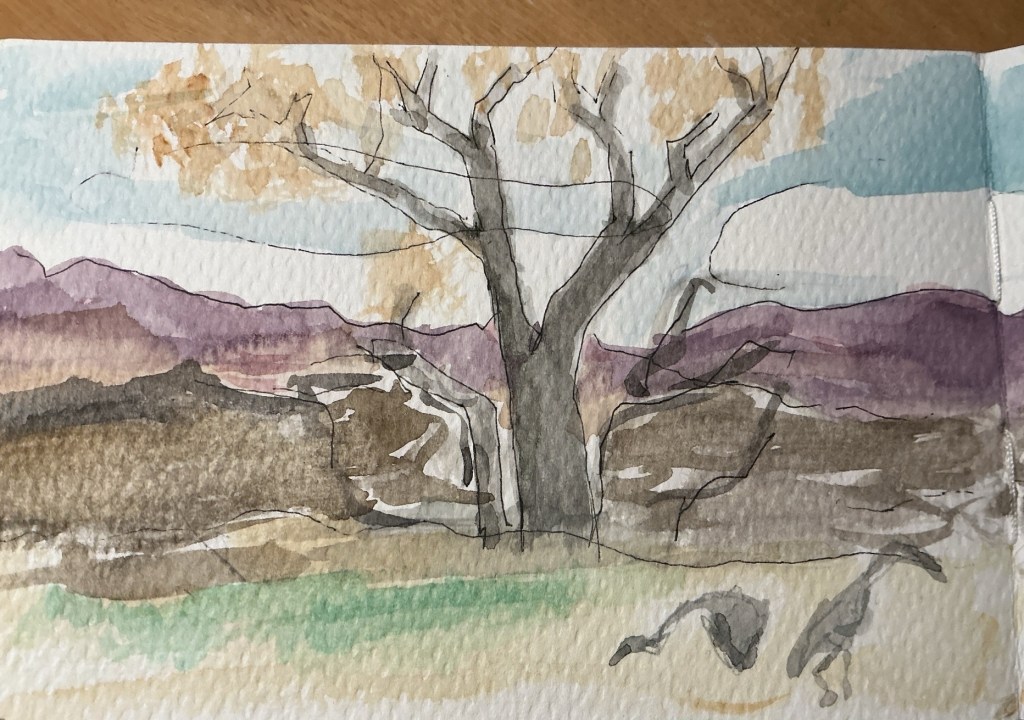
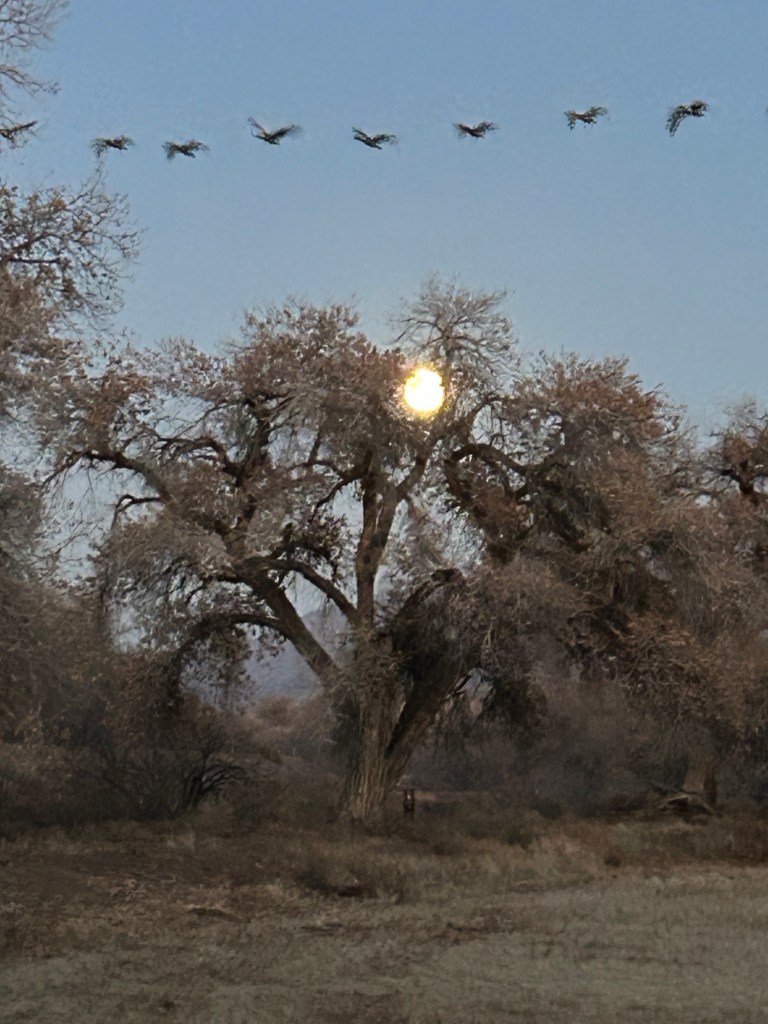
I didn’t like that they began to routinely harass the visiting cranes on my pasture.
So I got a slingshot and a bag of little clay balls and began wielding it, practicing on a target and shooting at them a couple times. Hindsight suggests I was far more threatening chasing them in by bathrobe waving a walking stick.
Whatever. It worked. They’re wary of me now and that’s healthier for them. They see me and trot a little faster, a little further away. I expect the word is out about me and that it’s tinged with mockery.
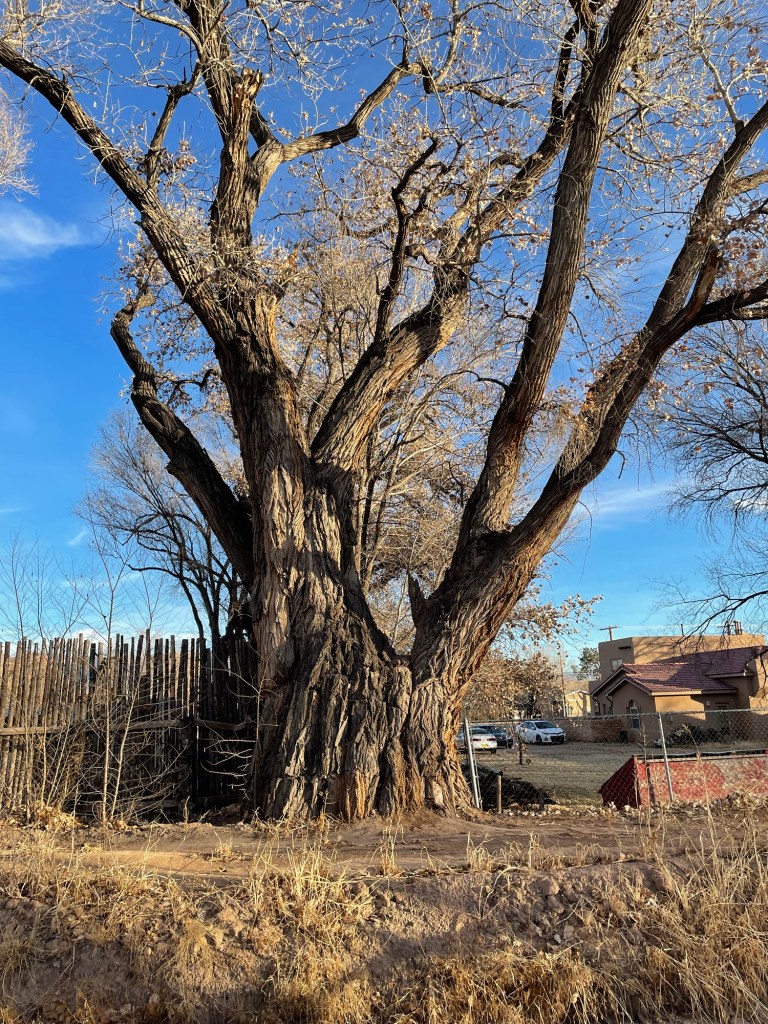
I love the cottonwood tree. Everything about it, including the nuisances of cotton and pollen (not the same thing,) the soft wood that’s not great for stoves and fireplaces, the tendency to “self prune” and drop heavy branches onto cars, roofs, and fences.
I still love it because “they aren’t making trees like that anymore.” We’re losing 80 foot tall trees and what goes with them. I’ll miss their shade the most.
Where I live, in the Middle Rio Grande valley, the trees are relative newcomers. I understand much of the bosque (forest) was cut down long ago. Somehow this is supposed to comfort me about their loss now. It doesn’t. Attempting to describe their deaths as a natural part of forest aging and decline ignores temperature extremes that stress the trees, among other living things.
Populus Deltoides wislizeni
The particular species I admire and love, is the Rio Grande Cottonwood, specifically Populus Deltoides wislizeni. It can grow 80 feet tall and is distinguished from Populus fremontii by ten “teeth” on each side of the leaf.
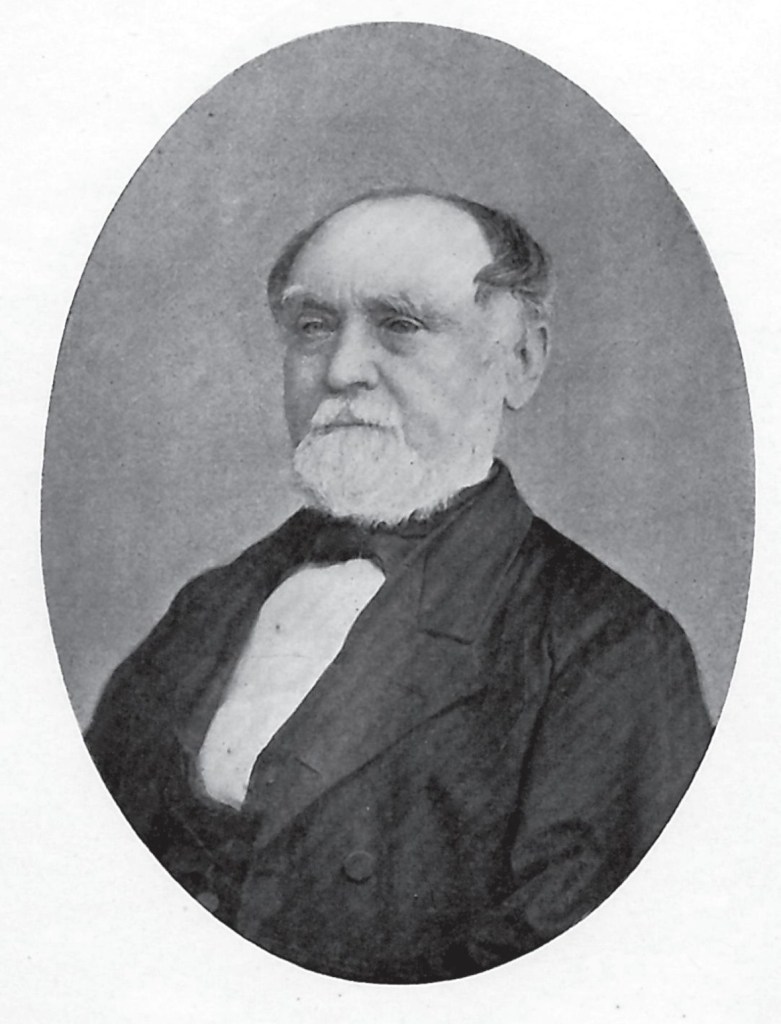
This subspecies was named for a German American doctor, botanist and explorer, Frederick Adolf Wislizenus. He must have been quite a character, not unlike the tree. He fled Germany after his involvement with an attempt to overthrow the German monarchy and ended up in St. Louis, bored. For amusement and without much preparation he joined the Rocky Mountain Fur Company on a journey to the Northwest in 1839. When the fur traders turned back, he joined a band of Native Americans and went on to cross the Rocky Mountains with them. He wrote an account of his travels that was published in German in 1840.
Back in St Louis he continued his medical practice and worked with George Engelmann, for whom the spruce tree was later named, at the Western Academy of Natural Sciences. But apparently he got bored again and joined a merchant expedition to Santa Fe in 1846.
Frederick Adolph Wislizenus (1810-1889)
Despite the onset of the Mexican-American War he traveled south into Chihuahua and was taken prisoner. He spent months in the country studying and collecting plants. After he was freed and returned to St Louis he published another report, Memoir of a Tour to Northern Mexico 1847-1848. In it he describes 180 plants, many previously “unknown.”
Engelmann studied the plants he collected and as thanks, named some species for Wislizenus, including our tree, a shrub, and the long-nosed leopard lizard, Gambelia wislizenii.
The great New Mexico writer and historian, Marc Simmons (1937-2023) noted that soldiers regularly mangled unfamiliar words and names. They changed “frijoles” to “freeholders” and they called the German doctor “Whistling Jesus.”
Is it really camping if you haven’t forgotten something important or yelled obscenities at a tent pole?
Valley of Fires State Park, Carrizozo, New Mexico
The big loop around southeast New Mexico took three days. The first night was at Valley of Fires and the second, Dog Canyon, or Oliver Lee. On my final night I stayed in Truth or Consequences for a mineral bath.
I’ve taken up camping again and I’ve learned or relearned a couple of things. I have a tent, of course, (several) and a cute little wood stove, and padding, but still, it’s sleeping on the ground in winter. To close a trip at hot springs is more necessity than luxury.
Another thing is that camping takes practice. To do it right – to cook fresh food outdoors – requires a mobile Brigade de Cuisine. Organizing menus, food, and equipment into some manner and combination of bins, boxes, grills, fuel and coolers. Then loading and unloading all this. And doing it all in the dark.
There’s also putting up the tent (don’t get me started) and arranging sleeping stuff. Or more accurately, arranging an area where you can get horizontal and hope to, but probably not, sleep. Practice, I repeat to myself as I roll over again and again.
From Albuquerque’s fair “Far North Valley” I headed deosil, or clockwise up and around the east edge of town on Tramway Boulevard. Subdivisions now extend to the edge of Sandia Pueblo and Forest Service lands. This was Bighorn Sheep habitat in my lifetime. My father bow hunted deer in “High Desert.” Part of me suggests I not dwell on the past. I need this reminder a lot, this trip especially.
Tramway eventually hits Tijeras Canyon, the tangle of I-40 ramps, Central Avenue, and the old Route 66 eastward through the canyon. I took this slow route eastward all the way to Moriarity. Indeed, the traffic does generally slow the further you get from the city’s commuter-shed. There are glaring exceptions, of course.
Old Route 66 is appreciated by “Mother Road” enthusiasts but this isn’t reflected in the general appearance of many properties along this section east of Albuquerque. The predominant land use is whatever you want. Most noticeable and glaring is outdoor storage. Even where there are zoning restrictions, which probably isn’t out here by the look of it, this category is open season, anything goes, or just sits and sits and sits.
Another visually impactive practice is bulldozing native vegetation. It doesn’t look like there’s any hydrologic purpose. On the contrary, they’re just scraping the soil of anything holding it down. Oh, and billboards. LOTS of bulldozers and billboards. Nothing seems to impede them.
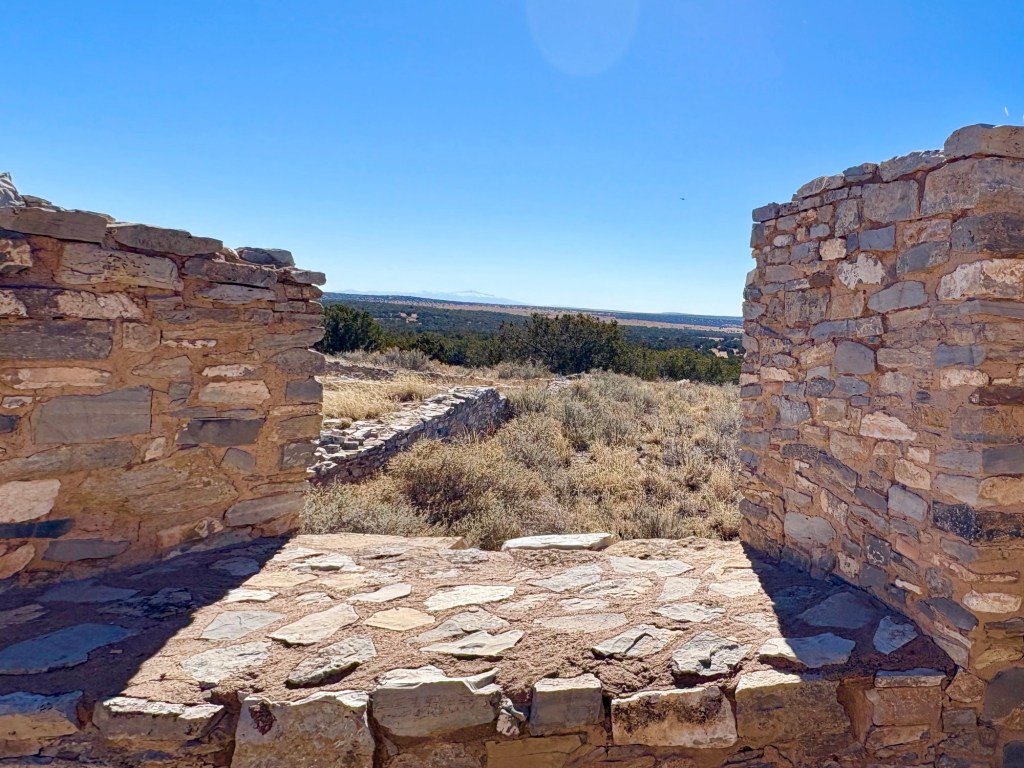
Turned southward at Moriarity after a breakfast burrito at Blakes. Headed through Estancia as the day warmed up. Briefly visited the Gran Quivera ruins, the southernmost unit of the Salina’s Pueblo Mission Monument. Remote doesn’t adequately describe this place. It was once a busy stop on the “salt trail,” for burdened people and animals carrying loads of salt from the lakes east of Estancia. Today I am alone and the visitor center is closed and locked. They’ve built a wheelchair ramp up directly to the remains of the church that is – noticeable. It was windy. I drove on.
“The Plains! Boss, the Plains!”
Highway 55 south. I picture buffalo and see a herd of antelope. The road moves down and across the plain. It turns left and right 90 degrees at smoothed out curves. It follows edges of an arbitrary 19th century grid that blankets land inhabited for millennia. It was probably surveyed in a week.
Claunch, New Mexico still has a post office. This was a pinto bean hot spot in the twenties. Both Gran Quivera and Claunch were on a NMSU road trip I took with 8 geography classmates and Professor Richard Helbock around 1978. The trip continued on into Arizona exploring old and new built places; Globe, Suncity, Arcosanti. We kept a journal. I lost mine. Undoubtedly I wrote about the visual evidence of hubris. I probably mentioned how short-term profit motives can have long term impacts that devalue places for centuries.
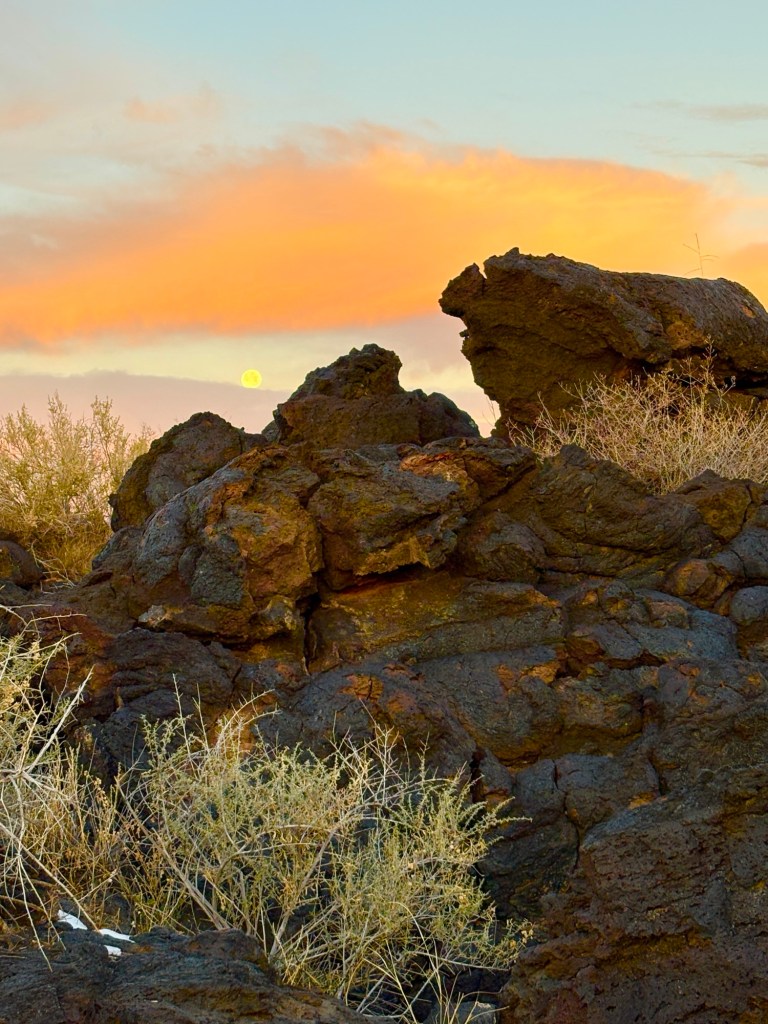
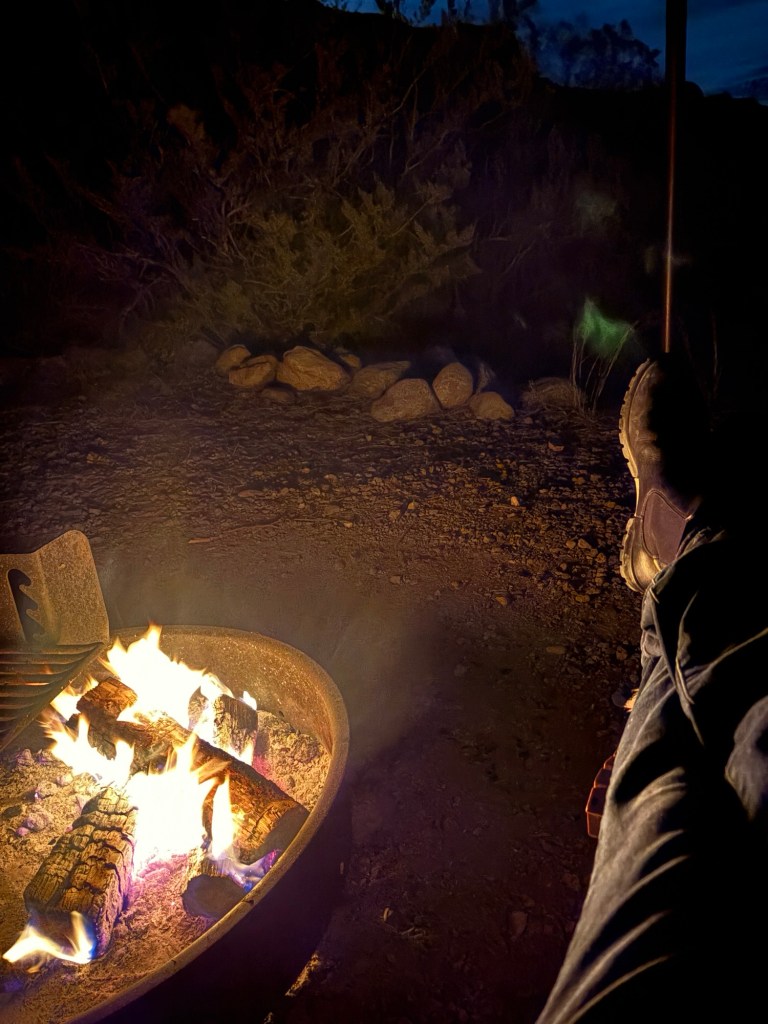
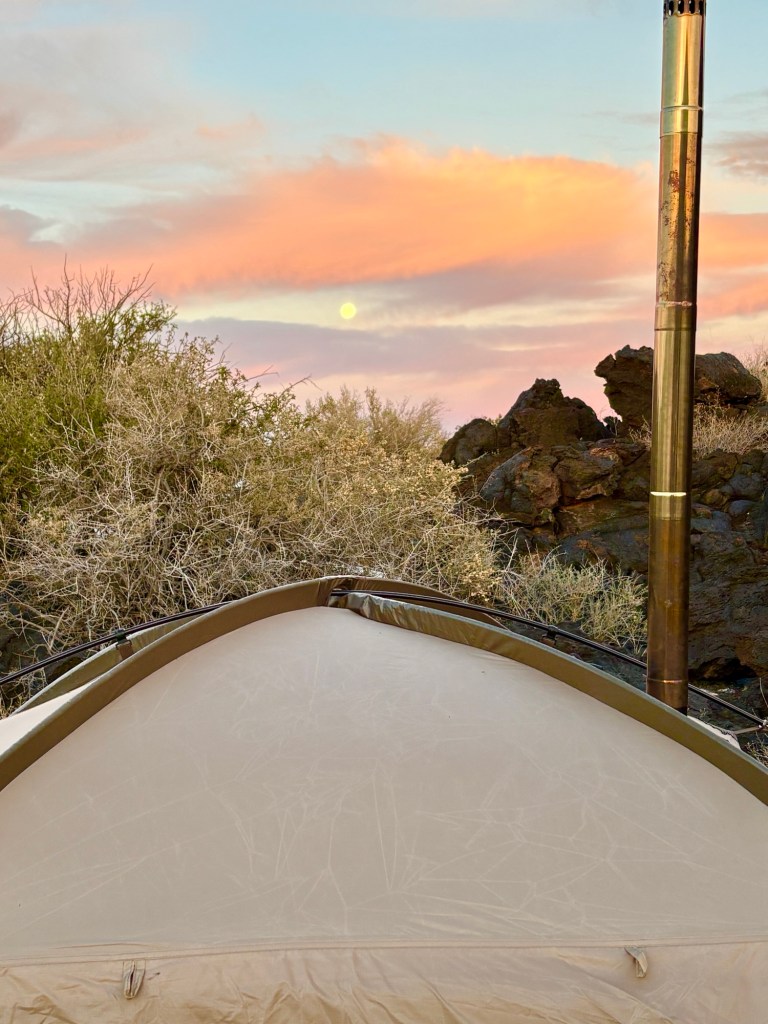
Sitting in my tent waiting for the full moon to rise as the temperature drops. The black rock looms over my tent site in the Valley of Fires campground. The lava is so young it looks like it could begin flowing again tonight. Birds sing in the dark on the edge of the campfire. Otherwise it’s quiet until a freight train roars through Carrizozo.
It is February 1, 2026, 130 years to the day since Albert Fountain and his son were murdered. Disappeared. Never found. Tomorrow I go the the State Park named for the man who was brought to trial for his murder but acquitted.
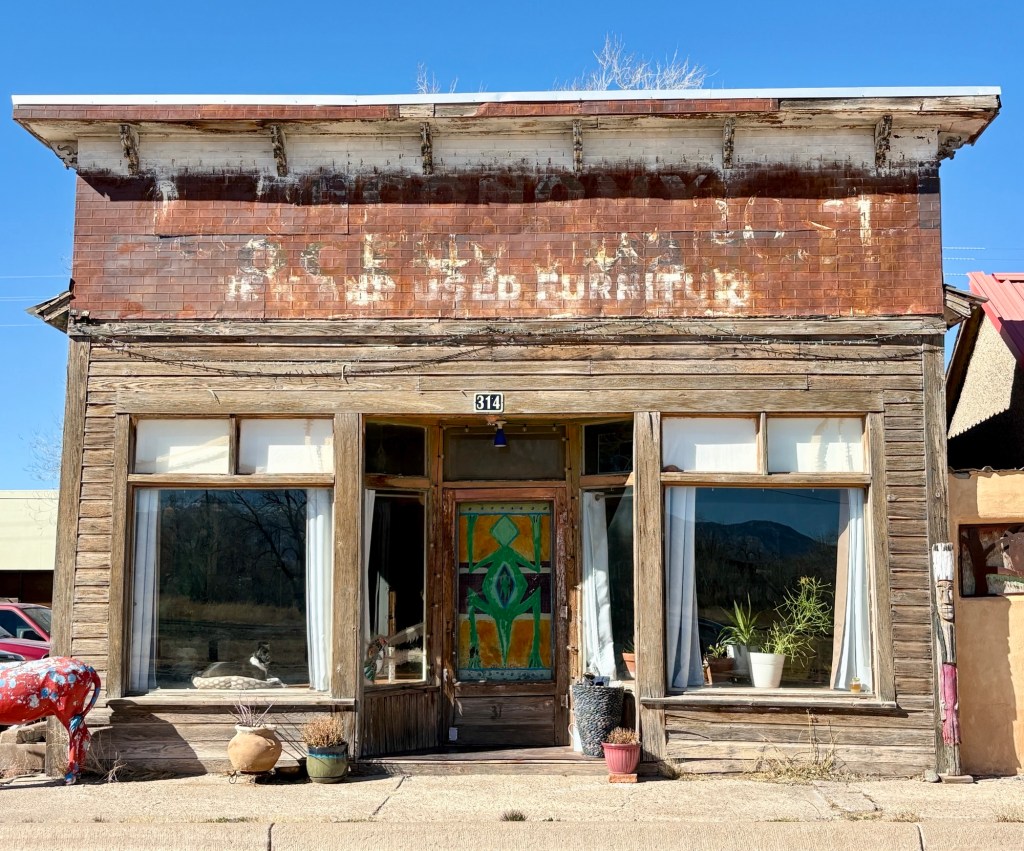
Carrizozo doggy in the window
Carrizozo sits at the intersection of two US highways and the railroad. And at the northern end of a closed geologic basin. The town was originally called Carrizo – after a type of grass that was prolific in the basin before cows. It is also the name of a Spring and Mountain. There wasn’t much there until the railroad came through in 1899. Even then, the town wasn’t platted until 1907. It’s known for things near there, like the lava flow, the Trinity site, White Sands, military stuff galore, and ranches of some notorious people – like Albert Bacon Fall of Teapot Dome fame involving oil lease bribery – a scandal that looks comparatively minor today.
Second night: Dog Canyon – I like the sound of it and it’s another nice, well managed campground. But, as usual, I wonder what those who came before called it. They sure as hell didn’t call it Oliver Lee.
Both campgrounds were very well maintained. Sites are reserved easily online and campground hosts and staff are friendly. Everything is clean and someone even rakes the gravel tent pads like a zen master. This surface is now about the first thing I notice. I arrive at the mouth of dramatic Dog Canyon, at the foot of the Sacramento Mountains, overlooking miles and miles of Chihuahuan desert, at close to sunset. But it’s all I can do not to stare at the sharp little boulders because, as I have noted, I’ll have to sleep on them.
I walked up the canyon a little bit and went in the museum. I was told that there are plenty of Oliver Lee’s descendants still around here which could explain the glowing description of the man as a cattle rancher and business booster. At worst he’s described as “controversial” and as a “gunfighter.” The story of the disappearance of Albert Fountain and his son is available in lots of places. But not here at this park. Like Cricket Coogler’s murder about 50 years later, it remains unsolved. There was no justice served for these murders but Oliver Lee is remembered with a nice state park.
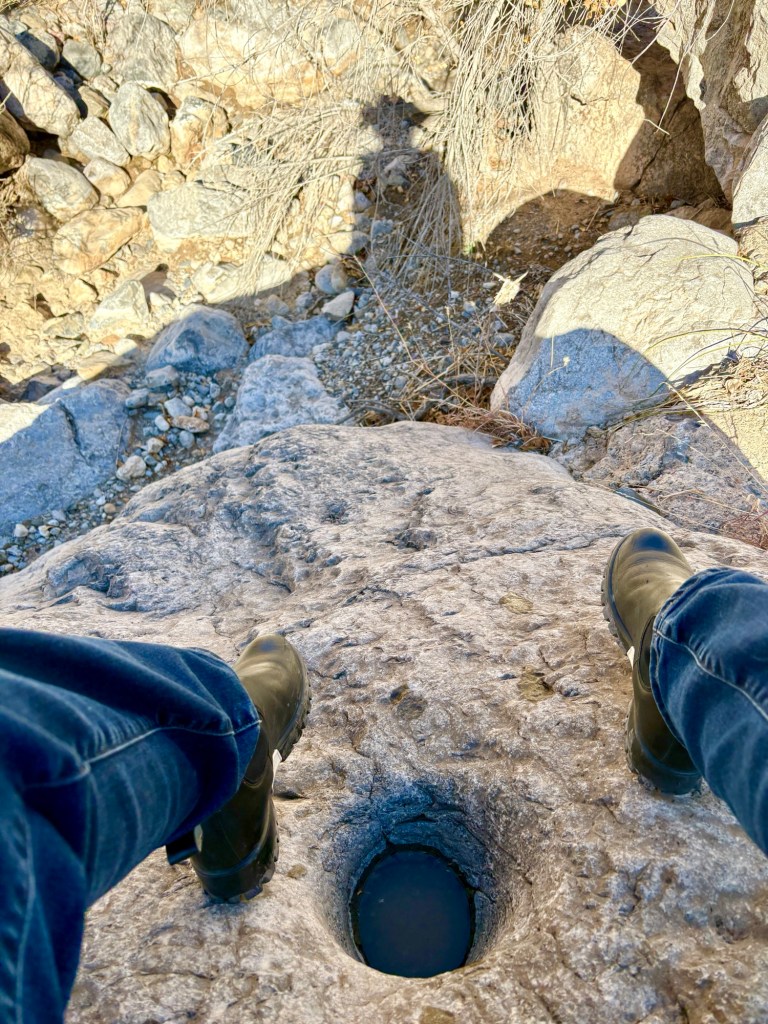
Mortar in Dog Canyon
Two nights camping is perfect. Everything can be organized before leaving and after the first night. After the second night, the charm and necessity of washing dishes in a bucket wears off. I can’t get the tent folded properly, there’s soot on everything, and it all smells like smoke. I dispense with careful packing and throw all of it in the car. Things don’t fit right. What started out covered, strapped and secure, is now a ungainly pile of crap rolling around on turns and stops. It’s a “Grapes of Wrath” load rattling up the freeway. I’m grateful for tinted windows. But you can’t hide from stuff that falls out when you open your door at the gas station.
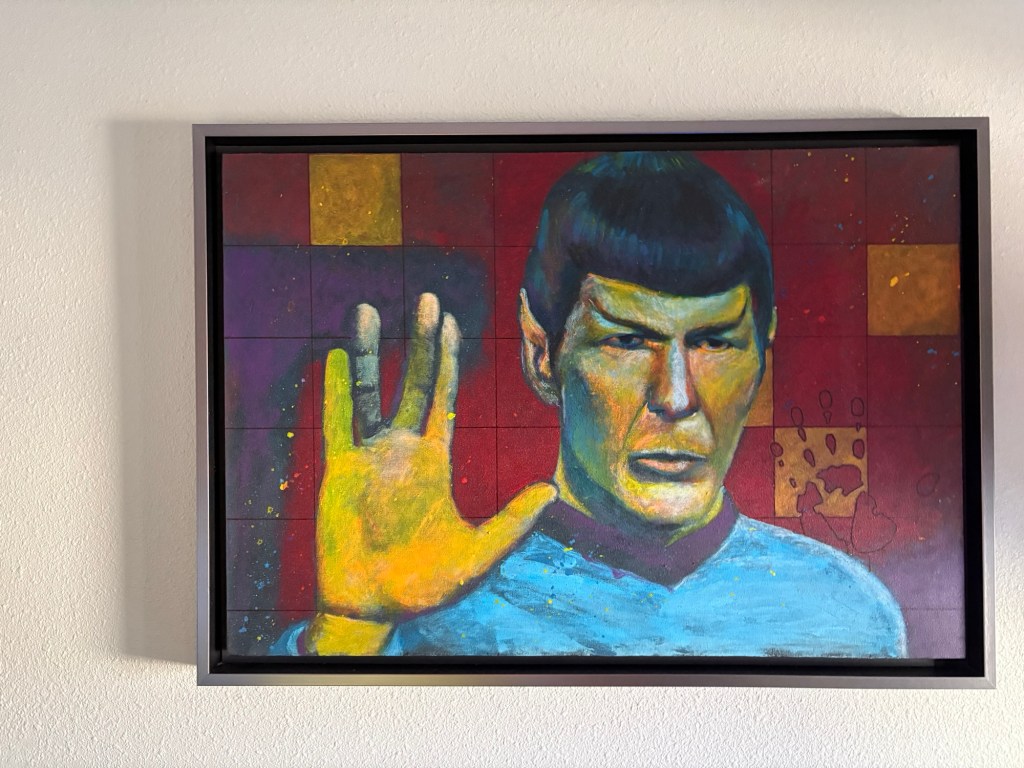
Last stop: Blackstone Hotsprings Lodging and Baths. Star Trek room with a soaking tub! Delightful closure!
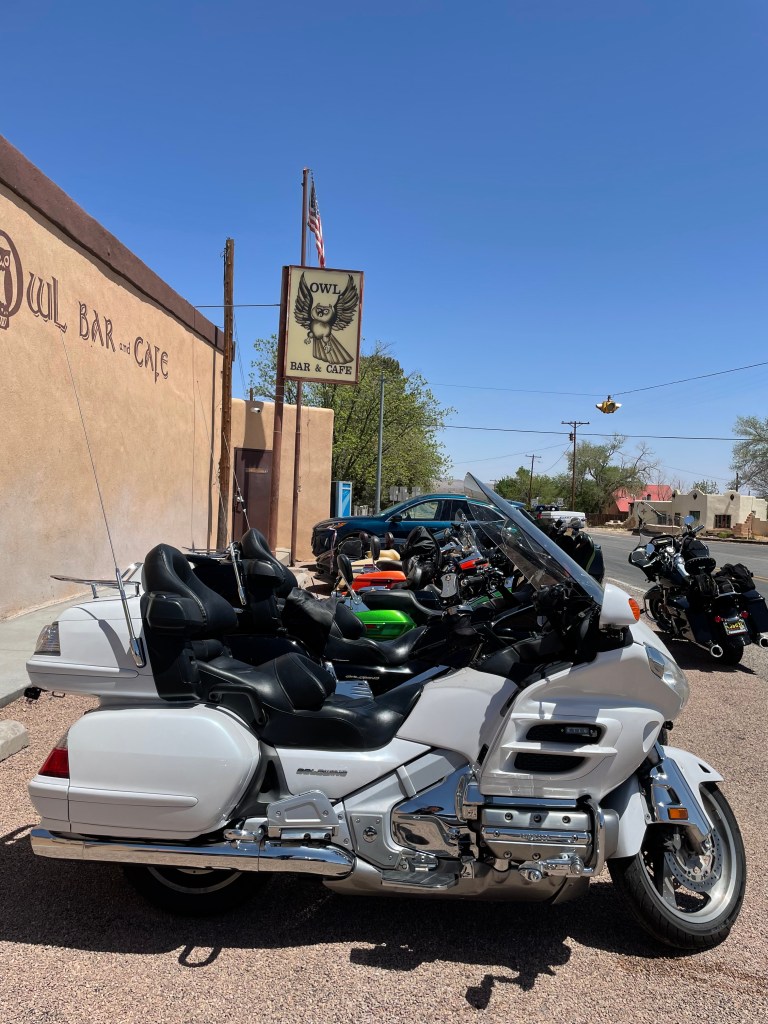
Green chili cheeseburgers at The Owl in San Antonio are obligatory. We weren’t on a motorcycle.
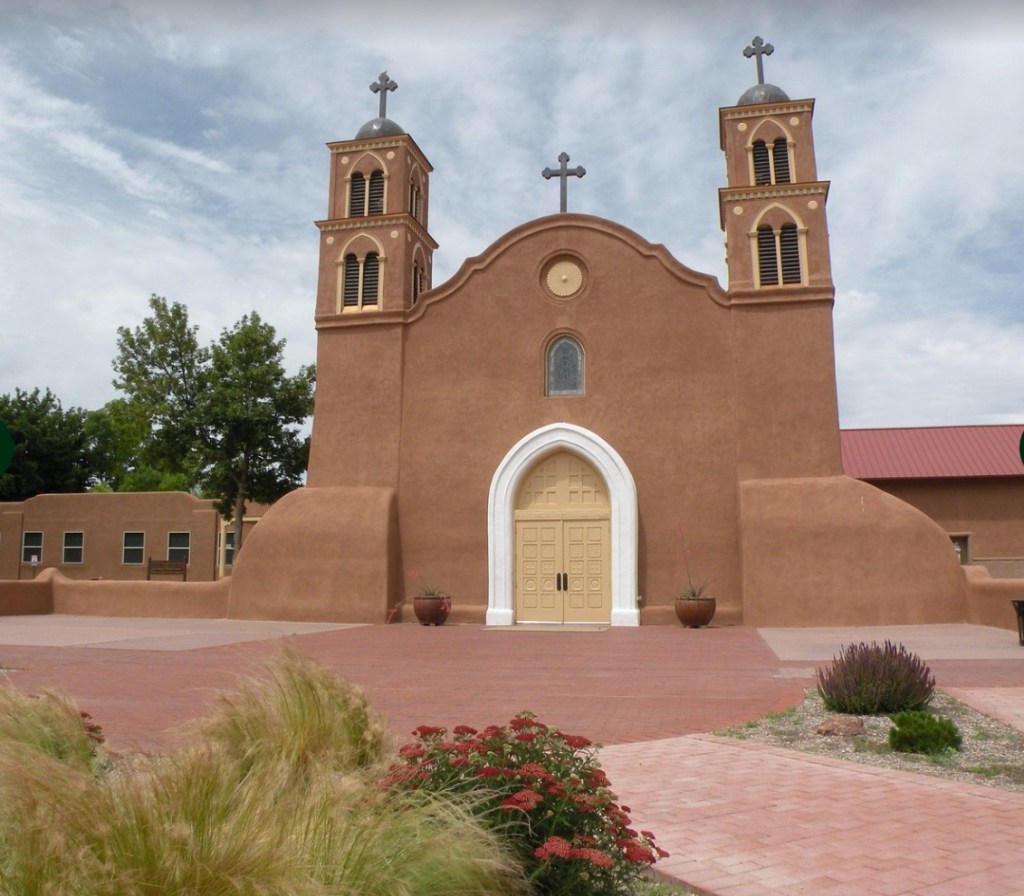
The church was locked up tight. We drove around the vast parking lot, acutely aware of what’s under the tires – probably a plaza and multi-story pueblo.
We came to see the interior of Socorro’s San Miguel Mission. Our associate Chan Graham was involved in a renovation in the 1970s and considered it one of his favorite projects. A man watering rose bushes in the churchyard told us that since “covida” they keep the church locked up except for services. Mass was at Five. Jerry asked him about the church and grounds and I admired the new expandable hose he was using. But our charm didn’t work. He didn’t have keys and we were a long way from mass.
The church is celebrated for being among the first Missions established by Franciscans in the 1620s. Oñate led explorers and a couple of priests here, or near here, in 1598. In their relief at finding friendly native Piro villagers, the place was later named ‘Our Lady of Perpetual Help’ or Nuestra Señora de Perpetuo Socorro.
They weren’t the first Spanish explorers by a long shot. Multiple Piro villages sat along on the route to and from Mexico and at the northern end of the notorious Journada del Muerto, a near waterless segment of the Camino Real.
According to Spanish chroniclers the place name for the area south of Tiguex was Tutahaco. The individual village names in the Piro “kingdom” are probably Spanish versions of the original place names They are intriguing; Seelocu, Pilabo, Teipana, Senecu or Tzenoque, and Qualcu. The overwhelming majority of these sites have been partially or totally destroyed through neglect or flooding or both.
There’s Always a Treasure. I think it’s usually a metaphor.
The Pueblo Revolt in 1680 forced long term abandonment of Socorro. According to the church website, a priest buried church silver, including a solid silver communion rail. The silver was never found. Or no one ever admitted to finding it.
The church was renamed San Miguel after Apache raiders were purportedly scared off by a sighting of the Saint brandishing his sword. It was substantially rebuilt after raids were subdued in the mid 19th century.
Bishop Lamy tried to bring six nuns to the New Mexico in 1852 but only four managed to survive the journey. They went on to establish 10 schools including the school in Socorro in 1879. The school – Our Lady of Mount Carmel operated continuously until closure in 1998.
Lucerne sounds nicer
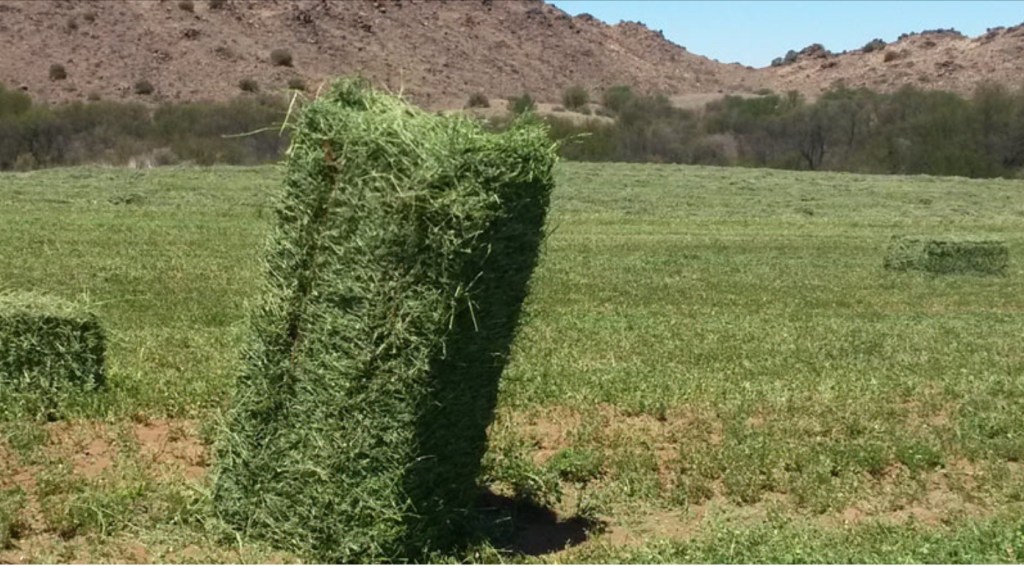
It was a nice day with no smoke or wind, unlike the day before and the day after. We got off the freeway at San Acacia, south of Albuquerque. We tried to take the older roads that hug the side of the valley and canals past old adobes, mobile homes and fields of alfalfa.
Alfalfa was introduced to what is now New Mexico by the Spanish in the 16th century to feed livestock. Cultivation began long long before that in ancient Iran.
It gets a bad rap for using too much water. That’s largely because it’s watered to produce multiple cuttings a year. It will grow without it too and for a long time. A 4th century Greek author notes these critical properties: one sowing can last over a decade and it can be cut 4 to 6 times a year. It also increases soil nitrogen and its deep roots sustain it through drought.
Jerry reminds me alfalfa was once called lucerne. We agree that sounds much nicer. More descriptive.
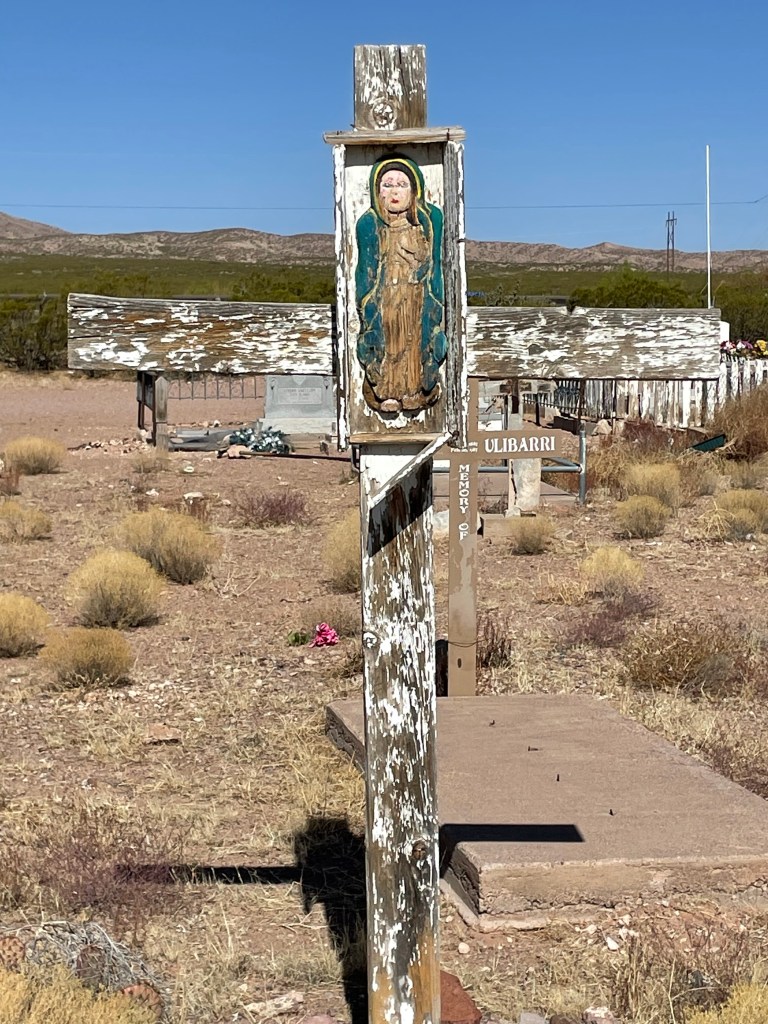
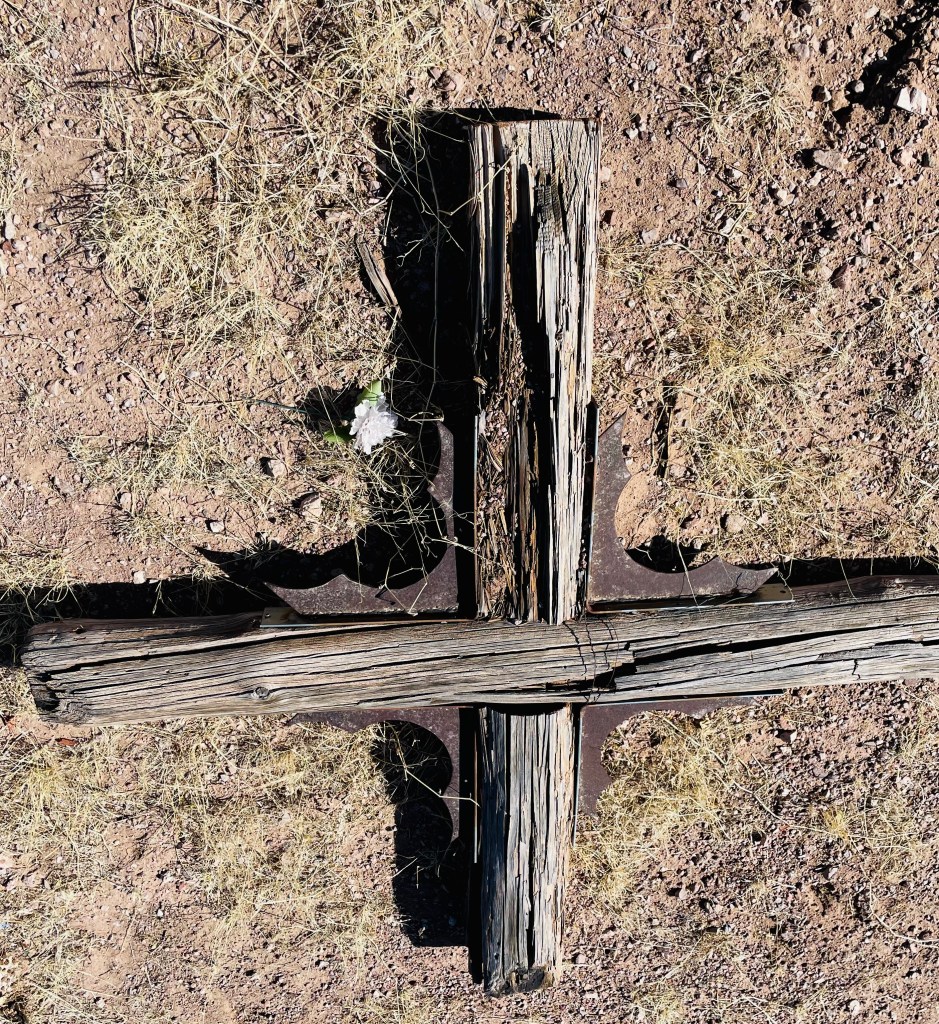
We stop at the cemeteries and search for the oldest graves, knowing the oldest are often unmarked or buried next to or under the churches.
Literally, and as metaphor, the road to the edge of the Black mountains holds messages about truths and consequences. I ventured westward on a picnic to scout camp sites, and to try and forget about the larger world. No luck on either.
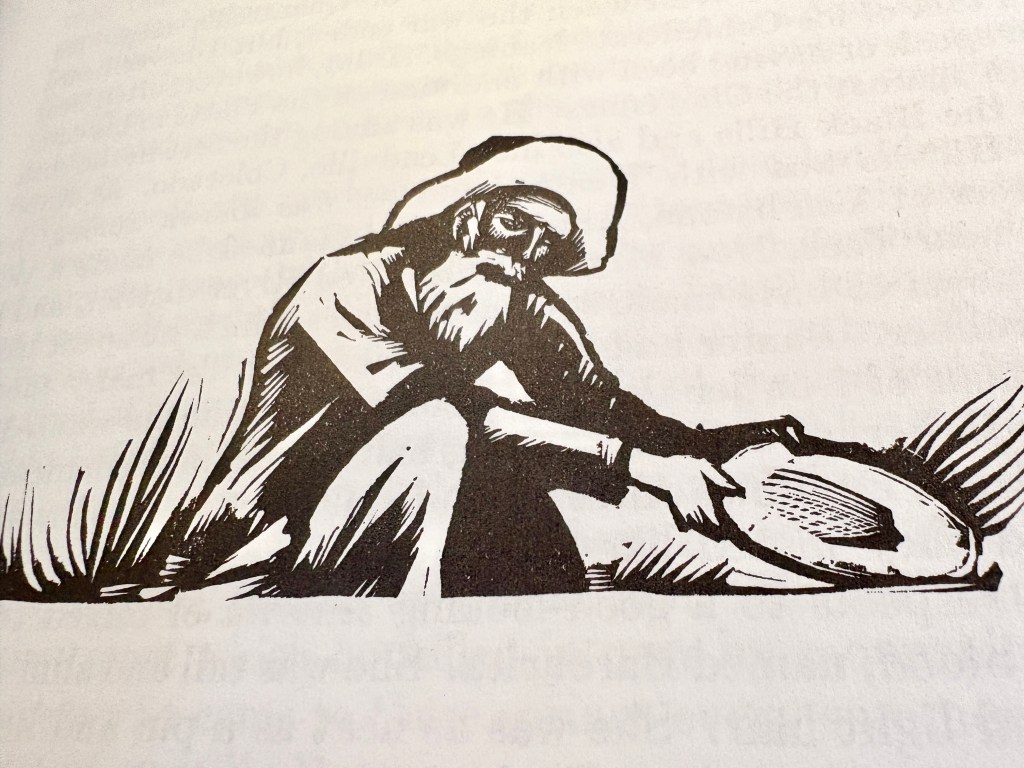
This Gila region was Apache country until it became mining and ranching country. That history is a brutal and slippery one. “Black Range Tales,” first published in 1936, by James McKenna, contains wonderful woodcuts and interesting tales, especially those about the Apache.
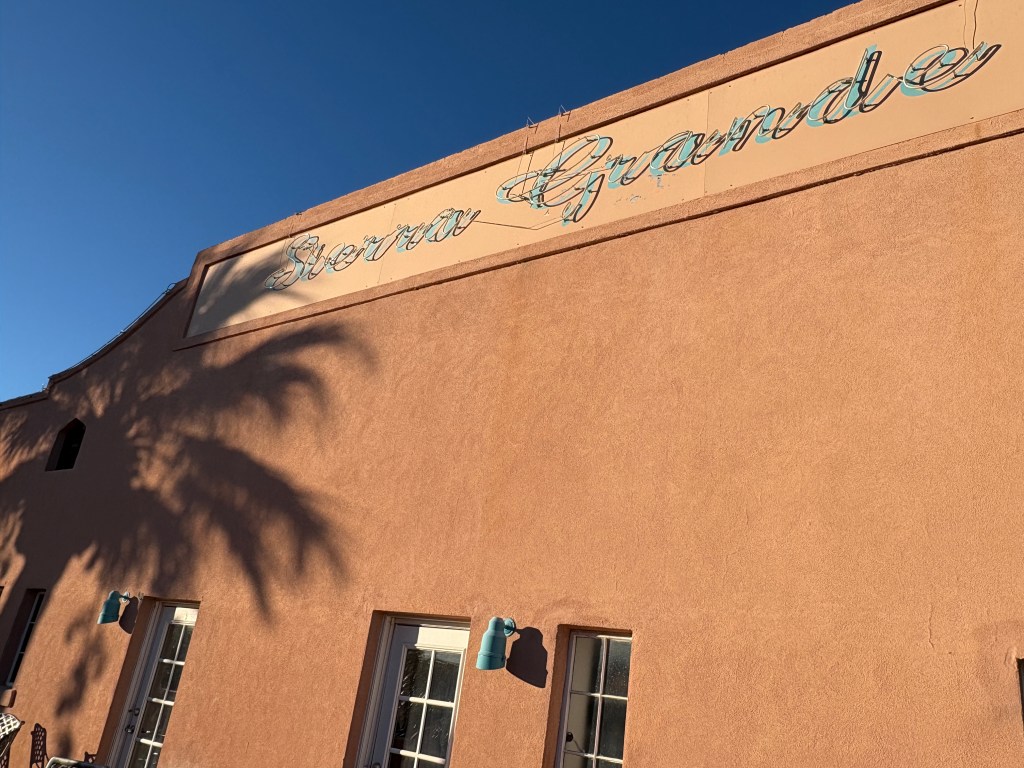
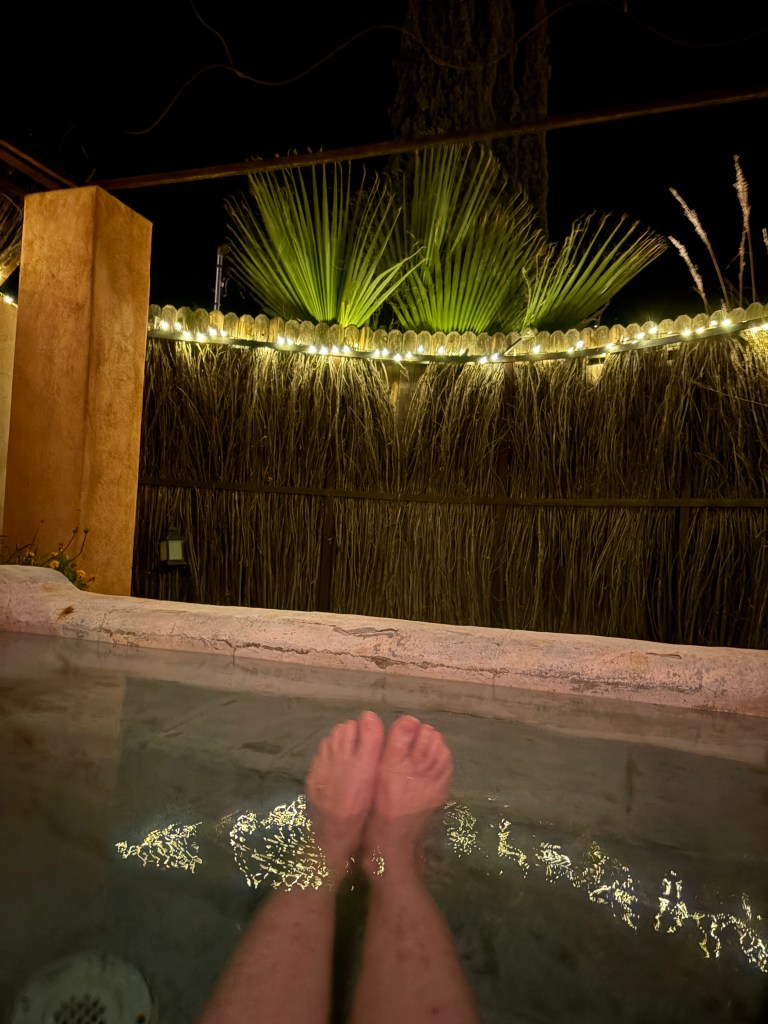
It was too cold to camp. That December Chaco Canyon trip quelled my appetite for winter camping – for now. So it was two nights at Ted Turner’s Sierra Grande in T or C where I was delightfully comfortable and warm in the room and in the water.
They call it Truth or Consequences, New Mexico but its renaming from “Hot Springs” had nothing to do with any prophetic political insight, then or now. It was a game show contest, which makes far less sense unless you get meta and figure this is all a game show. Sometimes I wonder.
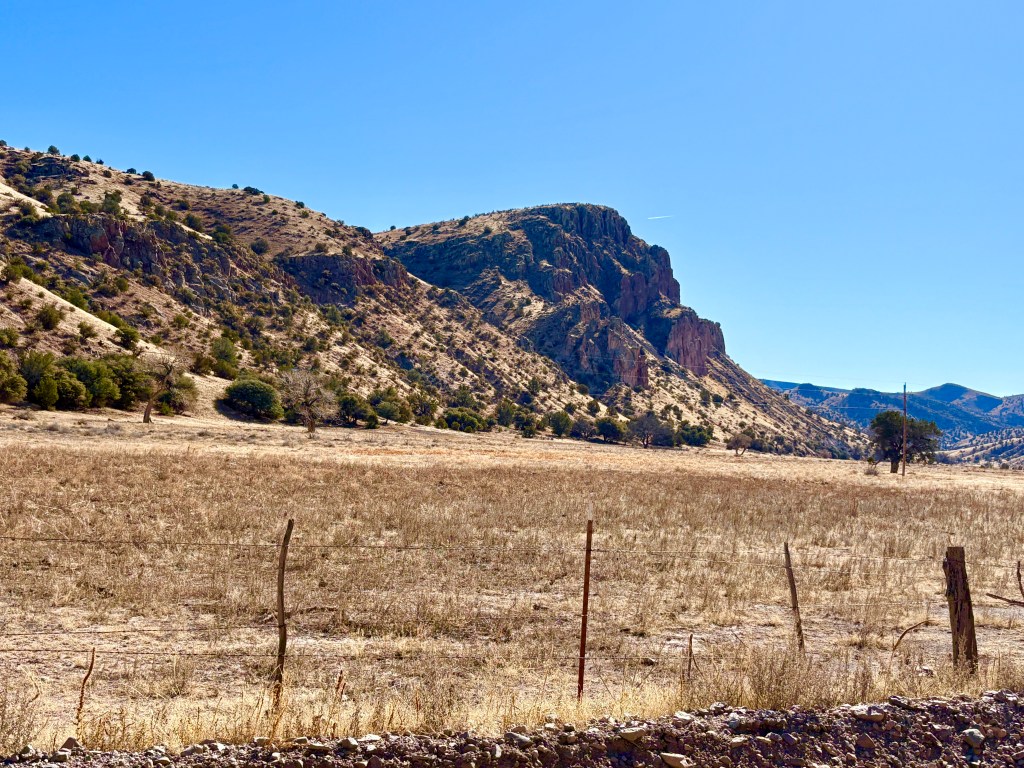
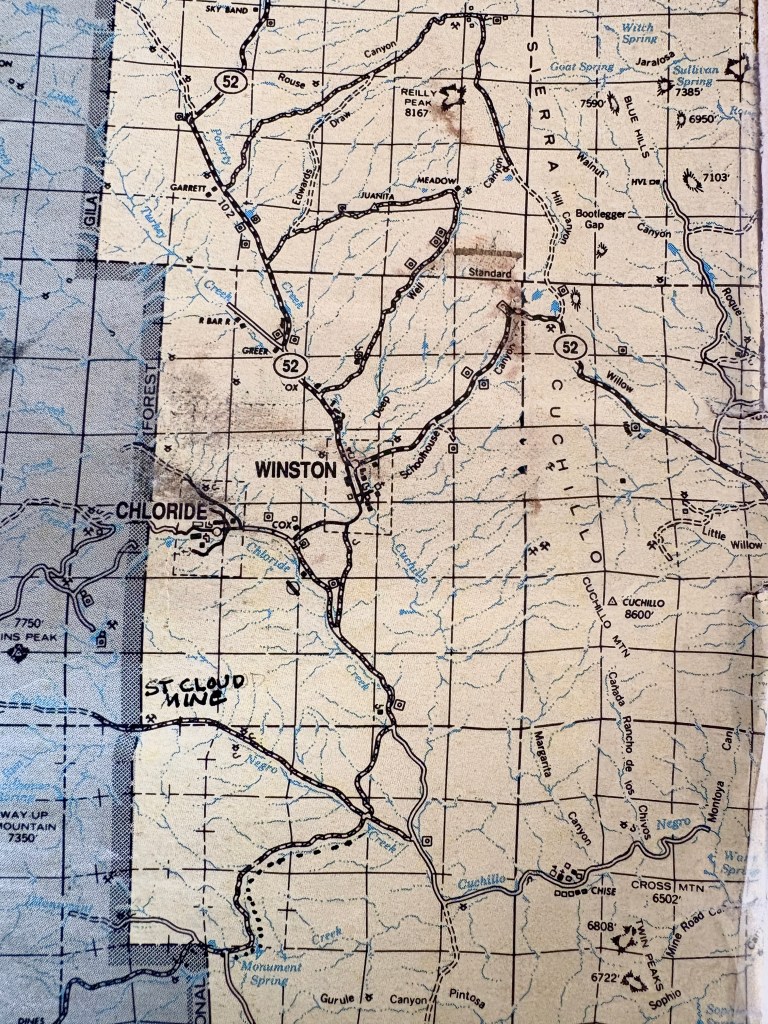
The highway west from T or C to Winston and Chloride, NM 52, is crazy. Crazy beautiful in its passage through the sharp knives of Sierra Cuchillo (meaning knife) toward the Black Range. It’s not unlike the route to Kingston and Hillsboro, except 52 doesn’t pierce the mountains but curves north toward the San Mateos. It’s crazy fun to drive and crazily driven. Trucks, pickups mostly, pulling stock trailers, atv trailers, equipment trailers, or nothing at all, confidently speed to and from Truth or Consequences. Probably for gas. Or Walmart. Or more cows.
There are a lot of cows, but no grass. It is plainly evident that this is because of the cows, as everywhere the cows aren’t, there is grass.
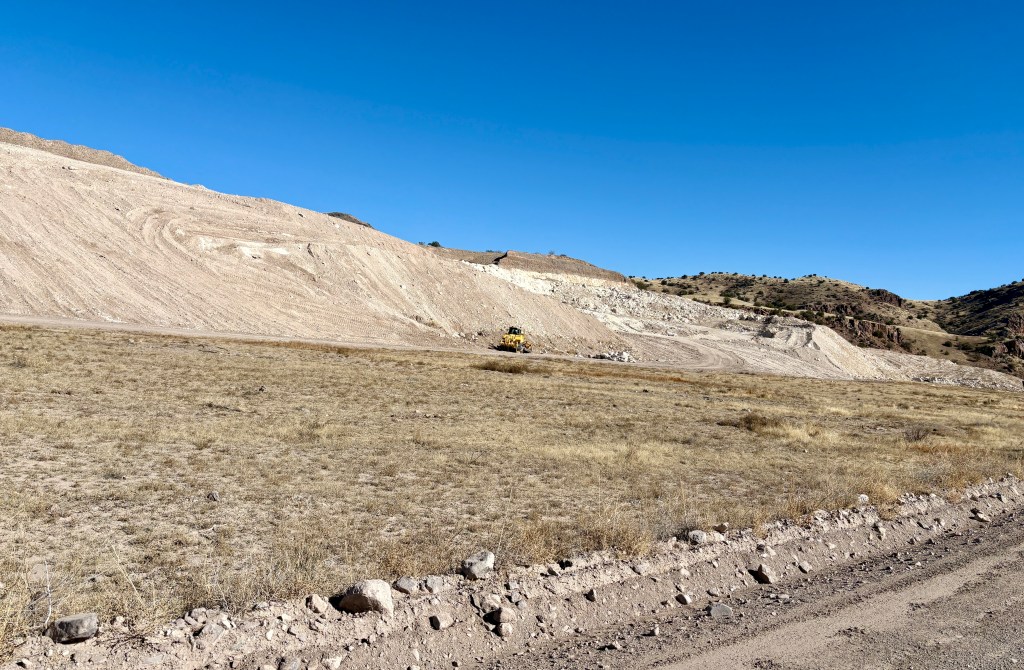
The good roads end at mines or houses and every road that crosses a drainage channel is a recent flood zone cleared by bulldozers. They’re apparently busy after every storm keeping isolated places from being isolated. To say those drainages look denuded and highly eroded is a fierce understatement.
Back to that road metaphor. The truth is you have to believe the road signs that warn you. Trusted sources (sometimes highway engineers) know what’s up – truths about what’s ahead right there in bright yellow. But, as we see, truth can be denied. People can deceive themselves into making stupid and reckless decisions, or apologizing for the lawlessness of others.
There’s such a long history here. So much went on before the mines and the cows. Even before the Apaches. So it is good to take a long view as long as you live in the present. Soak it all in. Enjoy truth, consequences, and hot springs.
I’m fortunate there wasn’t much wind. Setting up the new tent was no more difficult than it had been in my yard. It wasn’t much easier either. I had the poles in and was deciding which of the multiple openings was intended to be the entrance. I was rotating the unstaked tent this way and that when I heard a clucking and tsking. I looked around half expecting to see someone and briefly imagining the spirit of my sister criticizing the present alignment. As I scanned the cliff face, a brief gust lifted the tent up and rolled it back down, the main door facing east. I staked it where it settled.
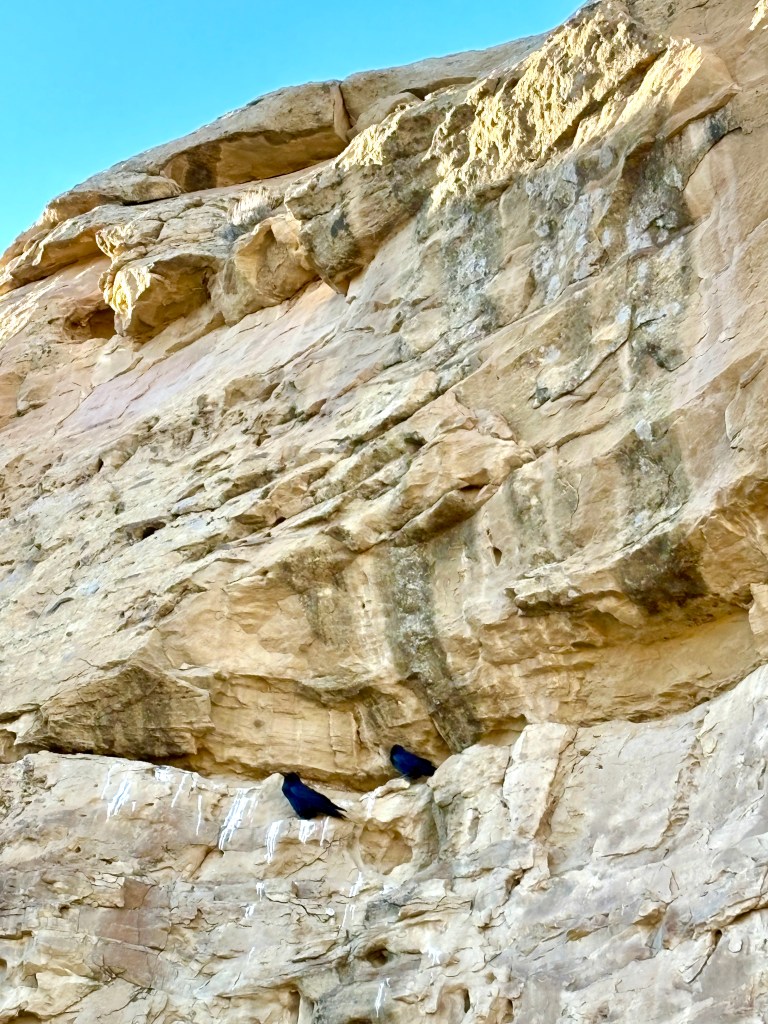
A raven flew over a couple of times. A pair of them flew in and out of the dark holes in the sandstone that look like so many black eyes. They fly right into the holes and disappear. They watch everything.
My father would have been 106 and it was with him that I last visited the canyon. The entrance was different and the road wasn’t as good. It was winter then too but I don’t recall seeing so many elk. Or any elk at all.
It’s a long way to drive for just a day visit. But most people do so it’s very quiet in the mornings before they arrive.
Alone? You’re going to be alone?
Not really. Have you seen Gallo Campground?
I can’t stand outhouses.
It has flush toilets in a heated building.
What if something happened?
I’d say “help.” I wouldn’t even have to yell. I could whisper it. That’s how close the spaces are.
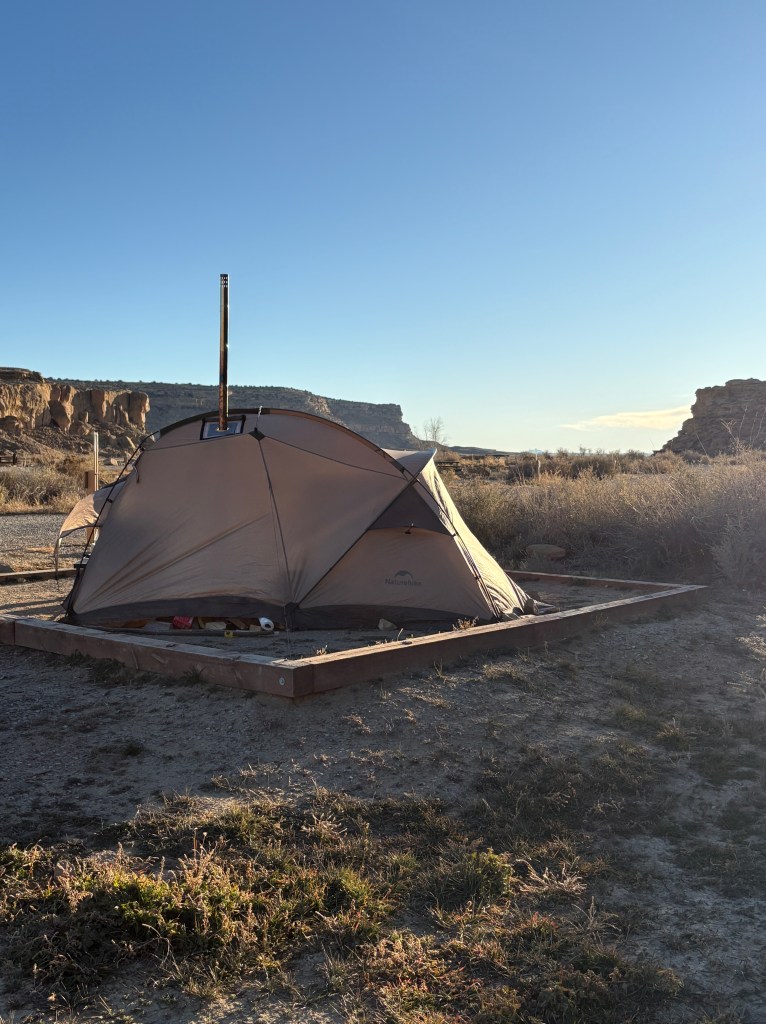
The Chaco trip I’d planned for warmer October was cancelled by the government shut down. On reopening I reserved a site in the campground and began amassing equipment including a selection of “hot” tents. Several people told me that my new tent obsession puts me on a slippery slope to RVing. My response is to get another tent.
I only have four now, not including those I’ve donated to make room in the shed for more. It’s sort of like Goldilocks trying beds. The first one would fit a small circus. It’s canvas and weighs over 50 pounds, I decided it’s more suitable for a two week glamping trip. The next is a “pop-up.” I was sent two of them. The first contained a used tent that I struggled to set up before noticing duct tape on a part. I pictured a desperate repair during a storm and decided not to chance using the new one.
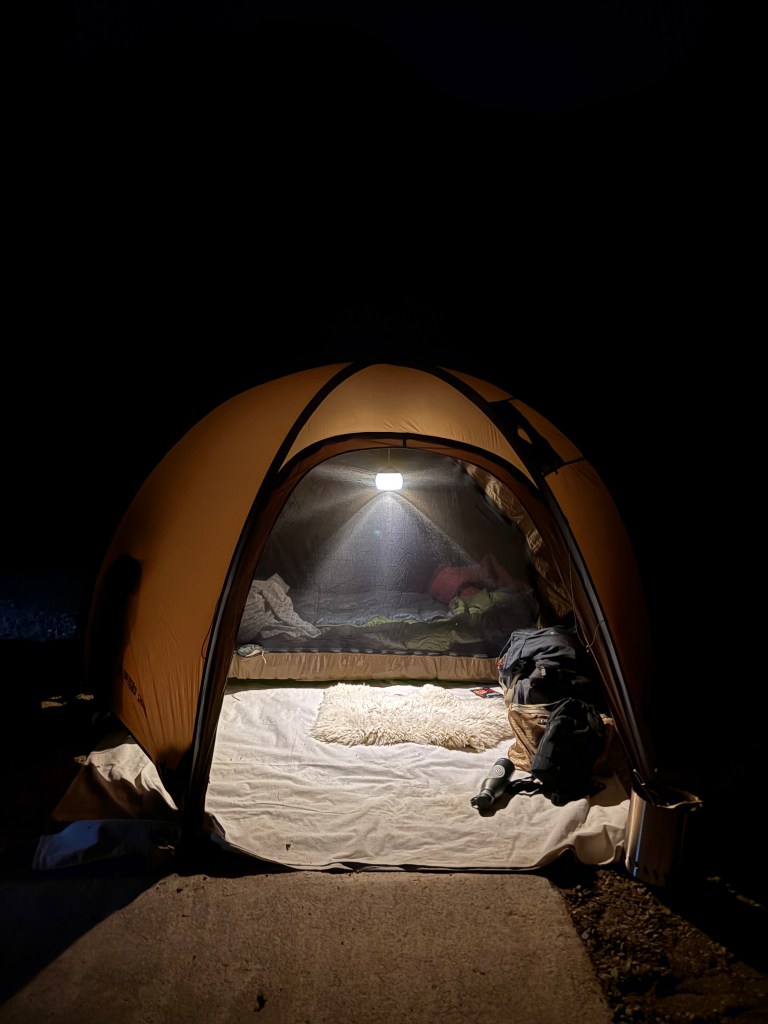
The third tent I got solely because they called it “Coco Nest.” It is inexplicably weird and difficult. Enough said.
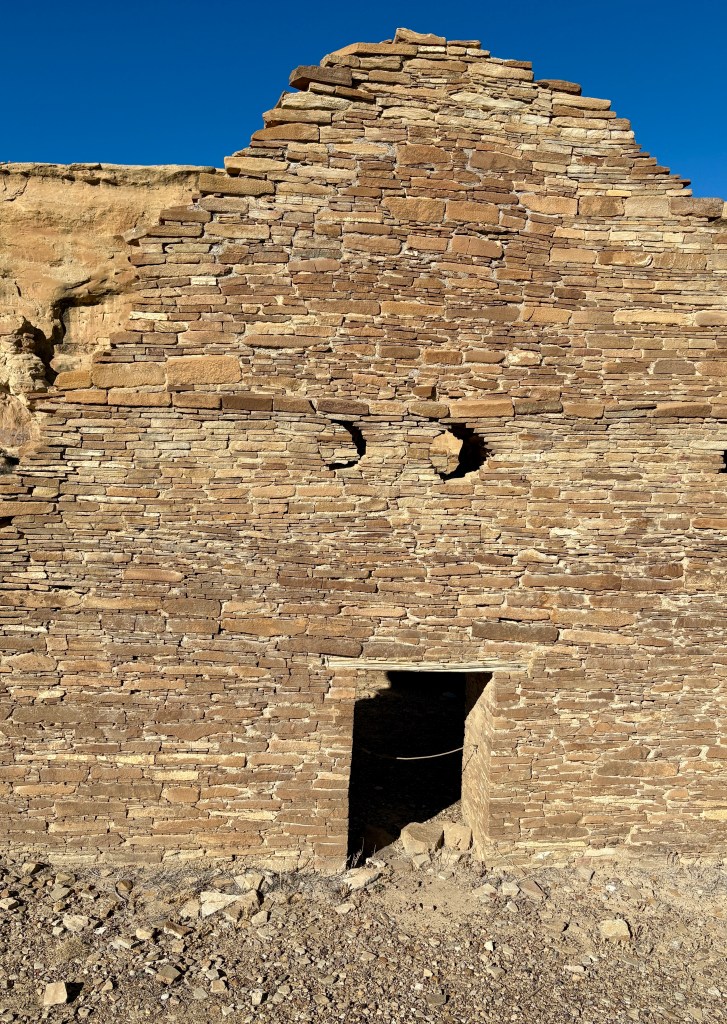
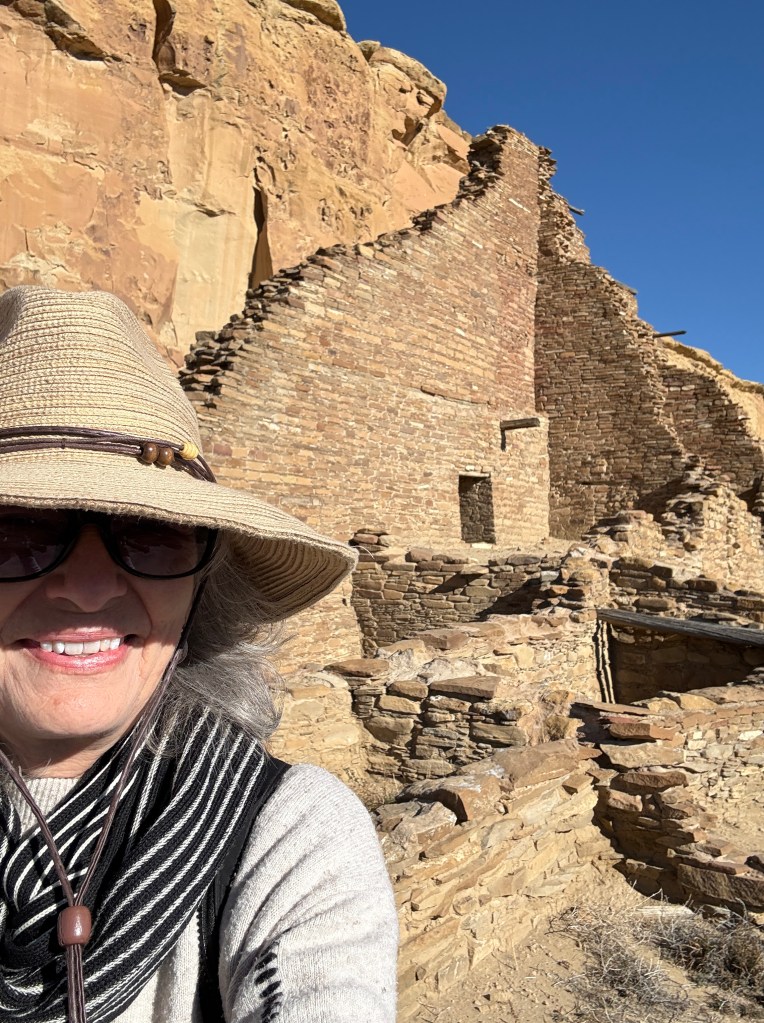
I settled on a version of a “Nature Hike” tent and drove to Chaco in the trusty Crosstrek with a tiny stove and enough wood for several Ancient Pueblo signal fires. A park ranger came around on the second morning and smiled at the huge pile of wood. “Staying warm?”
I also brought enough food for about a week and planned to cook and grill everything. I spent a lot of time looking for things I’d forgotten and struggling to do things in the dark.
The first night I didn’t sleep. At. All. The ground is a lot harder than I remember from camping thirty years ago.This was confirmed the next night. Sleep deprived and tired after hiking around ruins all day, I tripped and fell flat on my face. I remained there with my chin buried in the cold very hard ground for awhile assessing all my life choices. Especially that last one of not turning on my headlamp. Blood and bruises, nothing broken or chipped. No one in the campground saw this, though they might have heard a thump and groan.
Chaco’s campground is three hours from “civilization” but the spaces are about thirty feet apart. You can hear everything. Zippers, voices, coughing, rustling nylon. And it’s against a canyon wall that doubles percussive noises like car doors and amplifies whispers. Thankfully few people camp in December. But that night after nursing my wounds and finally getting to sleep, I woke to arrival of campers right next to me at 10PM. I listened to them struggling to set up their tent in the dark and almost felt sorry for them. They stayed in their tent all morning as I packed up. I tried not to make a lot of noise. But not too hard.
Victorian Hotels in High Mountain Towns and a late summer drive to Tucson
My first concern is no hot shower. The phone is charged, which is good because otherwise I would have missed the notice on my weather app about a “Regional Planned Emergency Power Outage.” That’s the wording. As a former city planner I’m especially amused by the oxymoronic term, ‘planned emergency.’ Apparently it provided “plausible deniability” for hotels that rented rooms in spite on knowing what was coming.
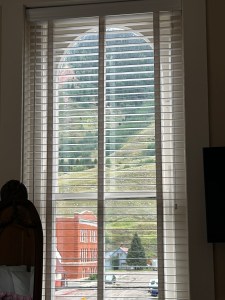
Up until then I liked my big bright corner room in the grand old hotel. The fire escape door at the end of the hall was tied open and there was a smell of room deodorant masking a sewer scent in the bathroom. But the mountain view – incomparable and stunning.
Red Mountain White Knuckles
The drive on US 550 between Durango and Ouray is intense. As kids we called the whole stretch the “Million Dollar Highway.” It probably costs at least that much every year just to maintain it. It is now apparently only called that between Silverton and Ouray. According to wiki, it’s the portion twelve miles south of Ouray – that last hair raising portion through Uncompagre Gorge, that gives the highway its name. Quick glances at faces in oncoming cars show passengers expressing worry or terror.
The highway is a staggering and impressive drive all the way from Albuquerque. It’s US 550 the entire way – Bernalillo on the Rio Grande Valley to Montrose on the Western Slope – through some of the most interesting geology in the west. Portions follow routes used in prehistory and the Old Spanish Trail. In the San Juans a man named Otto Mears built the first tollroads on parts of what became 550. Then he built the first railroad to Silverton. Collectors of railroad memorabilia love his Silverton Railroad passes, printed on buckskin and adorned with silver filigree.
It’s nice to divide the drive into two parts with a stop in Silverton for relief from the cliff-clinging road. A free Shakespeare production of As You Like It in intimate little Anesi Park that night was delightful. Multiple sponsors included UpstART Theater That Moves. The play was also preformed in Ouray.
The Silverton history museum has expanded from the old jail to a mining boarding house donated to the San Juan Historical Society and moved to town. In and under those buildings is everything related to mining but a live burro. A mineral exhibit has me transfixed and I stare at innocent looking yellow uranium powder for probably too long wondering if it’s safe.
My second concern on the morning of no electricity, is no hot coffee. I thank my stars for the cold brew I bought yesterday in Durango and sit in my car taking big gulps while admiring the looming mountainsides. They’re illuminated like a stage backdrop by the rising sun. No stage production could match it. Somewhere someone is whistling.
The whole county seems to be lined up in the one coffee shop with a generator. There are delicious pastries. A hot cup takes over ten minutes. Everyone is listening to city workers – big guys in work clothes talking loud and greeting each other as they file in between the tourists. One guy says marijuana is a gateway drug and another says it sure was for him. The whole place erupts in laughter.
When the lights finally come back on no one cheers. A sense of camaraderie evaporates. I leave for Ouray and another old Victorian hotel.
I love old places, including big richly storied western hotels. I worked at an old resort near Denver for a summer in college. It was memorable. I can smell it now – old wood and dust. The work was grueling – dragging an old vacuum cleaner to hillside cabins, cleaning all day after serving breakfast then cleaning up to serve dinner. The six of us lived in a bunk room under the porch with no insulation and touchy wiring. No one could use a blowdryer without blowing a fuse and this was the late seventies so that was a problem. We got one day off a week, separately. I would drive to Denver in a borrowed VW beetle alone to watch The Rocky Horror Picture Show.
It was pretty – that canyon and the trees and the grand old three-story tower. We rattled the bones of that building at square dances in the lobby, attendance at which was mandatory. Sometimes people played the piano. The whole place seemed alive.
Give me an old hotel over a new dull and anonymous one any day. But some people think that’s what a hotel should be. They don’t want character, just sleep. Preferably with electricity. Ideally with no unpleasant smells.
The interstate is very bumpy and busy past the Arizona border. It is best viewed from a distance as it stretches out in the distance on the descent from the mountains. Trainline-like lines of tractor trailers move back and forth. You barely see the car. When you’re on the interstate it’s like that too. Cars are outnumbered by big trucks.
Somewhere west of another place named for Apaches I see my first glimpse of saguaros waving welcome.
Gadsden Purchase was 45,000 square miles the US ripped-off from Mexico in 1854 for a transcontinental route and a railroad magnate’s aspirations. Mexico pretty much ripped it off from the Apaches who probably ripped in off from the Mogollon and Hohokam and Ancient Puebloans. It never stops. All this within a millennium.
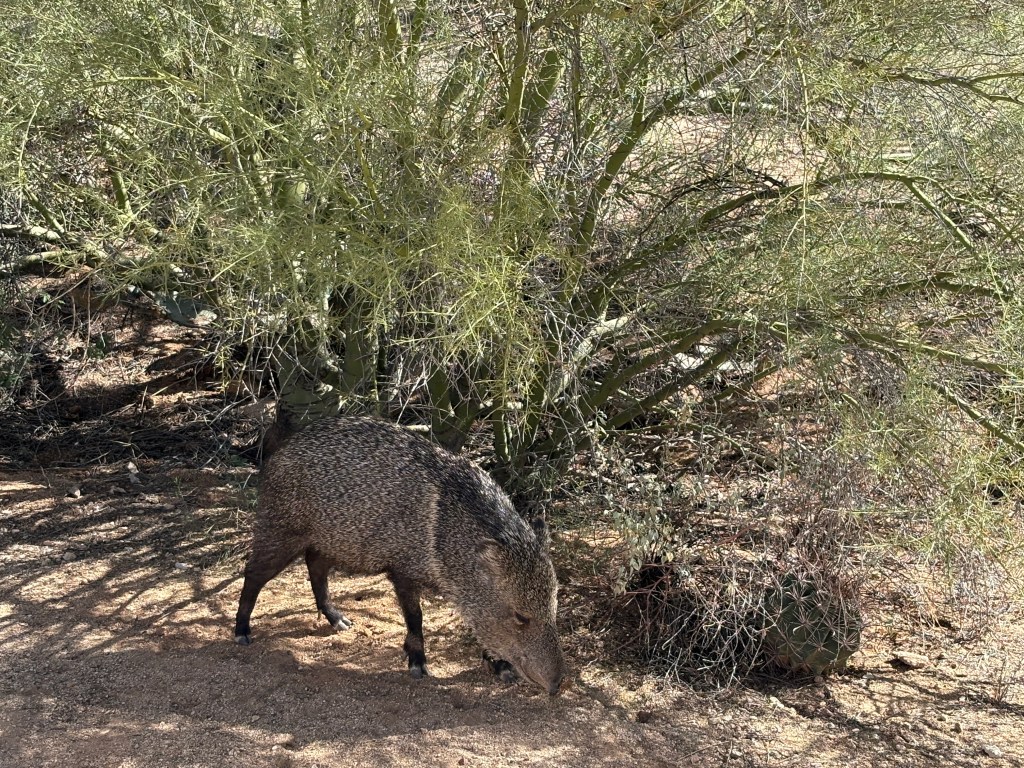
Subdivisions punch holes in the Sonoran desert. It is an honor and a tragedy to be this close. Like petting an endangered fish. I baby talk to a javalina from the swimming pool. The relentless wheel spins as the desert is blanketed with boxes and asphalt. What will be next, you can’t predict. So breathe the delicate morning air. Enjoy the native desert. Come back when it’s cooler.
“You’d think this far away from “civilization,” here he used air quotes, “that you wouldn’t hear cattle screaming all night .”
The Deming Luna Mimbres Museum lives up to its moniker, “The Biggest Little Museum in the Southwest.” The old Armory building is a standout. The volunteer staff know their stuff. The gift shop has a great selection of books on geology, archaeology, and history. Native American artifacts, including a Mimbres pottery collection, take up much of the first floor. Down a long hall is the stunning mineral collection larger than those of Silverton or Ouray museums in Colorado. As I said in a TACA post, it’s a museum hoard of gems and geods and dreamy-deep geological details.
Is five tents too many?
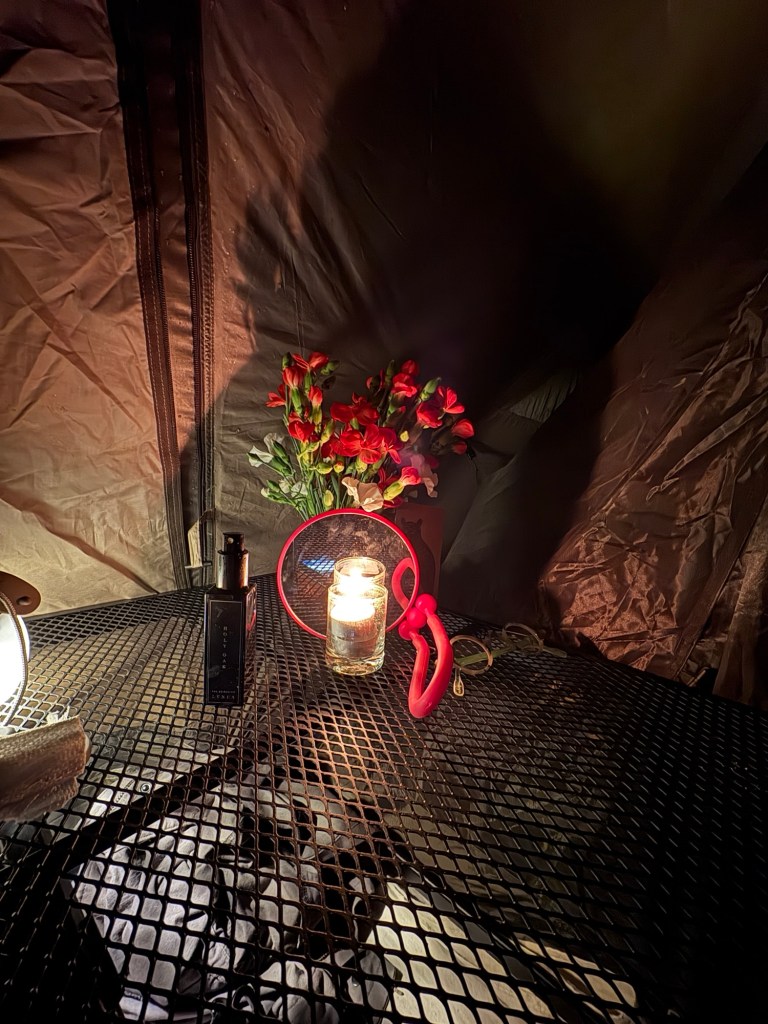
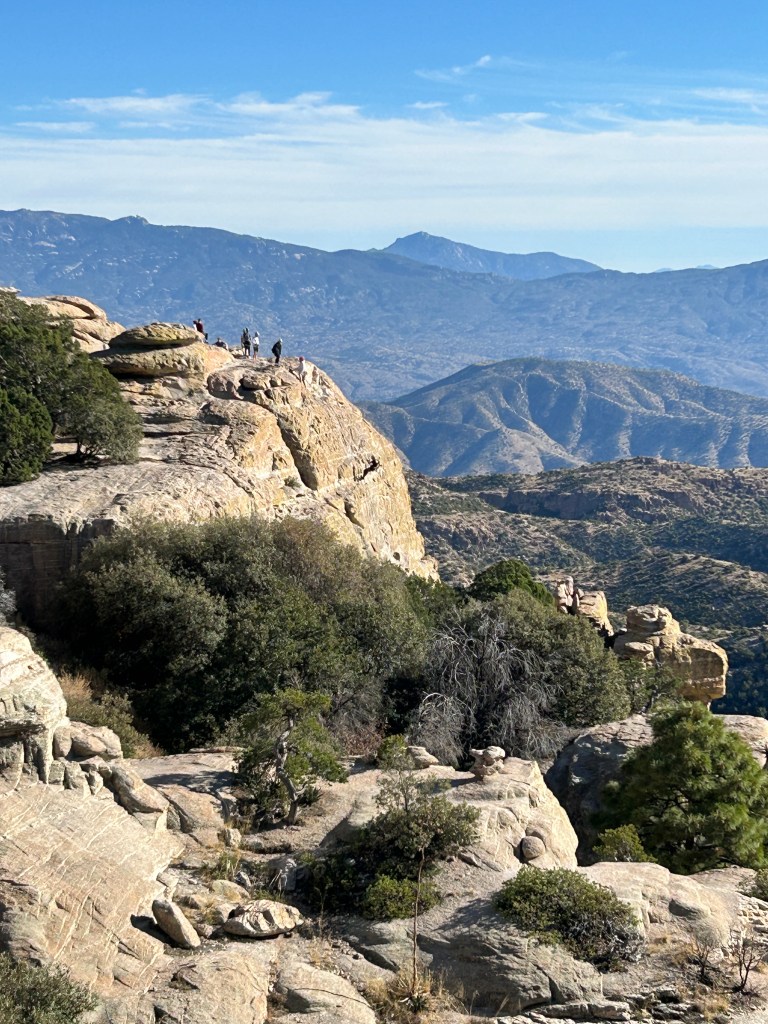
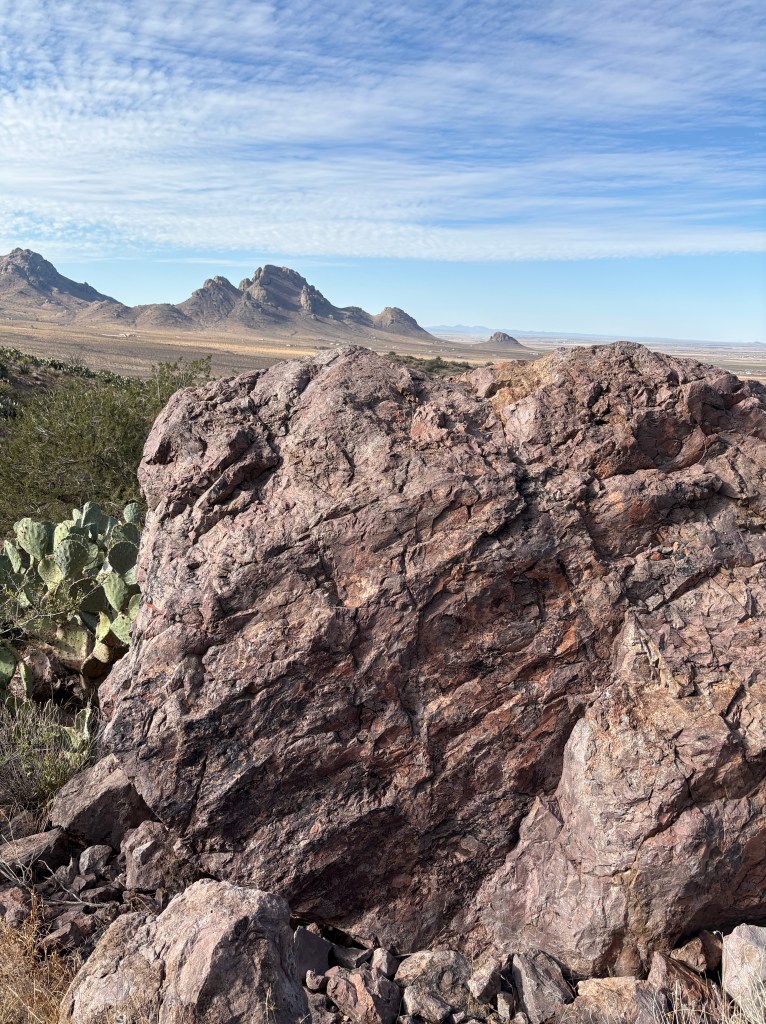
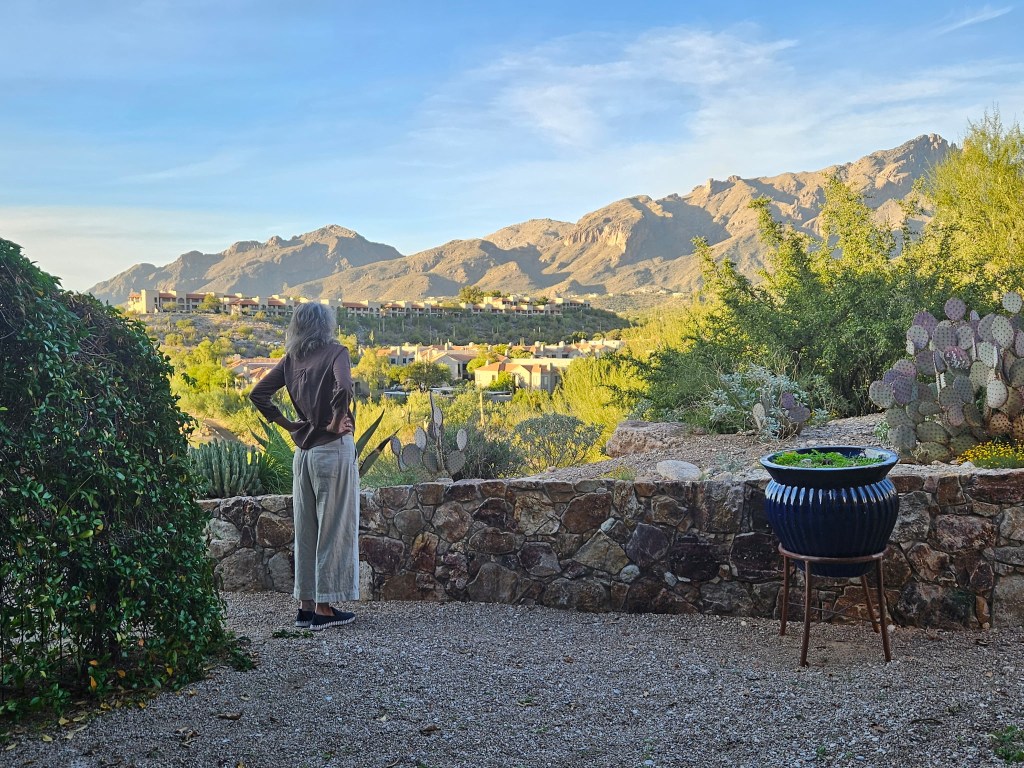
Camped for the first time in decades. I sort of got suckered into buying another tent called Coconest and then hauled everything camping related all around Tucson metro for two weeks before camping two nights in one place.
 Cocoposts